Under the Radar
Video Game Picks

South Scrimshaw Part One
Indie • Narrative Sci-Fi • Free
Play on Steam | PlayStation | GOG | itch.io
Considered a visual novel (VN), South Scrimshaw is a slow-burn, illustrated biology-and-exploration adventure that feels like playing a natural history documentary. The game follows the entire early life of a fictional extraterrestrial whale species (the “Brillo Whale”) from birth trhough adolescence, depicting its struggles, exosystem, growth, and survival. It’s art heavy, with a mix of watercolor, ink, and dibital painting that contribute to its lush, hand-crafted feel. The presentation is linear; you don’t pick multiple paths, and it’s more about the storytelling, atmosphere, and immersion than player decision-making. South Scrimshaw is a “short but heavy” game that is frequently described as “stunning,” “emotional,” and “life-affirming.”
Developer Nathan O. Marsh has announced that the full story will be split into two parts, with the second (South Scrimshaw, Part Two) in the works, though as of this writing, the release date remains unannounced.
If you love >> melancholy sci-fi, speculative biology, linear VNs, ambient storytelling

Horses
Indie • Horror • $ 4.99
Play on GOG | itch.io | Humble Store
Horses is a first-person psychological horror experience that blends mundane farm chores with increasingly surreal and disturbing imagery. You play a young man spending a summer on a secluded farm where the “horses” are nude, pixel-censored humans wearing horse masks; the horror comes not from jump scares but from atmosphere, social critique, and the slow unraveling of the farm’s true nature. Despite its short (3-4 hours) length, Horses has gained a reputation for being provocative, art-focused, and emotionally abrasive in the way only boundary-pushing indie horror can be.
The game became widely discussed after Steam and Epid both refused to sell it, citing “inappropriate content” and IARC rating issues, despite earlier approvals. These bans pushed the game into underground notoriety and sparked ongoing debates around censorship, artistic freedom, and platform control.
If you love >> psychological horror, surreal allegories, slow dread, morally challenging narratives

Signalis: Directive
Indie • Sci-Fi • Survival/Horror
Play on: PC | Steam | GOG | itch.io | PlayStation | Xbox | Switch
This hit from studio rose-engine impressed critics across the board and built a loyal fanbase through word of mouth. A love letter to classic survival-horror, it features tight inventory management, fixed-camera tension, and environmental puzzles wrapped in a cold, unsettling sci-fi world that feels more like a psychological thriller than a monster game.
You play as Elster, a Replika unit searching for her missing partner, and the story unravels in a way that encourages players to connect the dots for themselves.
The industry response was unusually strong for such a small project. Reviewers praised its art direction, sound design, and narrative style, calling it one of the standout indie horror titles of its year. Players have latched onto its symbolism, hidden clues, and branching endings, spawning plenty of theory videos and deep-dive essays. Even now, it regularly pops up in “best modern horror games” lists, and its success has sparked ongoing discussions about how indie studios are pushing the genre forward in ways big publishers rarely attempt.
If you’re into slow-burn sci-fi, classic survival-horror mechanics, or games that leave you thinking long after the credits, Signalis is absolutely worth the play. It’s a great example of how indies continue to innovate while the mainstream market plays it safe.
If you love >> retro horror, cosmic mystery, puzzle-heavy sci-fi
KarmaZoo
Indie | Sci-Fi | Co-Op Platformer | Party/Puzzle $ 9.99
Play on: PC | Steam | PlayStation | Xbox | Switch
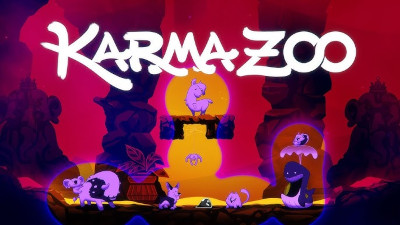
KarmaZoo is the kind of game that feels like it was built in direct rebellion against the usual competitive, sweaty multiplayer trends. It’s a cooperative platformer built around helping total strangers succeed, and the entire progression system rewards you for being kind, patient, and a good teammate. Up to ten players run chaotic little obstacle courses together, each taking on a strange, adorable creature with its own quirky ability. You’re not competing for points; you’re pooling “karma” to unlock new characters and new ways to support your group.
Critics loved its charm and the pure wholesomeness of its design, though it never really broke into the mainstream the way many believe it deserved. It did get praise, however, for its clever level design and for being the rare multiplayer game where failure is funny rather than frustrating. Unfortunately, it also hit at a time when countless other online indies were fighting for attention, and the servers didn’t stay healthy for long. Still, the game earned a lot of admiration for what it tried to do: rethink multiplayer as a space for cooperation rather than competition.
If you’re into joyful chaos, light puzzle-platforming, and games built around actually helping people, KarmaZoo is a sweet, suprising gem with a lot of heart.
If you love >> co-op silliness, wholesome multiplayer, quirky creatures

Arc Seed
Indie | Mech | Strategy | Tactical | Turn Based | $14.99
Play on: PC | Steam | Playstation
ARC SEED launched on PC (via Steam, exiting Early Access in September 2025) and got a PS5 port that dropped in November 2025.
You pilot massive mechs to defend Earth from alien “Angels,” combining strategic, grid-based combat with roguelite deck-building elements. Between upgrading your mech, customizing loadouts, building “city-defenses,” and navigating destructible environments (sometimes using buildings themselves as weapons!) the game leans hard into thoughtful, tactical mech fights and replayable chaos.
As of post-Early Access the reception’s been pretty decent. Players and critics praise how the deck-/tactics-hybrid gives each run a different flavor, and how the destructible urban environments add a nice layer of strategy. That said, the beginning runs can feel slow and punishing until you get a solid build going.
If you’re into big-mech combat, strategic deck-building, urban-destruction-plus-tactics, or want a roguelite that rewards experimentation, ARC SEED is a strong pick and one of those indie gems that feels like it could broaden what mech games can do.
If you love: tactical mechs, deck-builder strategy, destructible-environment chaos

Routine
PC • Indie • Sci-Fi • First-Person Horror $22.49
Play on: PC | Steam | Playstation | Xbox | itch.io
Routine finally landed in December 4, 2025 after a famously long development. This retro-futuristic nightmareps you into an abandoned lunar base, a retro-futuristic nightmare rendered with crashy CRT-era tech, flickering corridors, and malfunctioning androids. Using the diegetic “C.A.T.” tool (your only interface), you explore, investigate, and try to survive without the benefit of HUD or handholding. There is only creeping dread and old-school sci-fi horror mechanics.
Critics have been mostly positive, with many praising the atmosphere, tension, and immersive design. Its being compared favorably to the likes of Alien: Isolation. Some reviewers, however, flag pacing hiccups such as stealth-heavy sequences and recurring chase/puzzle loops that can feel repetitive.
If you’re into analog-tech sci-fi horror, slow-burn tension, eerie lunar environments, and games that demand patience and immersion, then Routine is a solid pick for you.
If you like: retro sci-fi horror, immersive exploration, tense stealth survival
Lorn’s Lure
PC • Indie • 3D Platformer • Atmospheric Exploration • $14.99
Minimalist, eerie, and very physics-based. Think Mirror’s Edge meets Inside.
Play on: PC | Steam | Xbox | Switch | itch.io
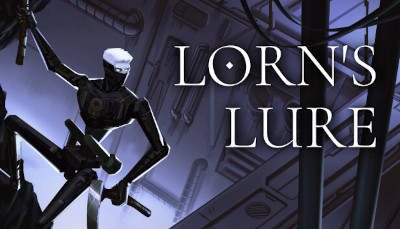
Lorn’s Lure is a first-person precision platformer set inside a massive abandoned megastructure that feels equal parts surreal, industrial, and strangely peaceful. You play as a lost android chasing a mysterious glitching figure deeper and deeper into the labyrinth, using your climbing picks to scale walls, vault across impossible gaps, and navigate spaces that feel like a cross between brutalist architecture and a forgotten simulation. There’s no combat; the challenge comes from movement, momentum, timing, and figuring out how to bend the environment to your will.
Critics and players have praised its atmosphere, its sense of scale, and its “flow state” gameplay, especially once you get comfortable with the climbing system. It drew attention as one of those small indies that punches above its weight visually, blending minimalist storytelling with enormous, beautifully lit structures that beg to be explored. Some reviewers noted the difficulty spikes and occasional frustration in later sections, but the overall reception was strong, and it’s consistently recommended to fans of Mirrors Edge-style traversal or platformers that treat movement as the story.
If you’re into eerie megastructures, movement-focused exploration, and games that reward persistence and precision, Lorn’s Lure is a hidden gem well worth the journey.
If you love >> atmospheric traversal • surreal architecture • precision platformers