
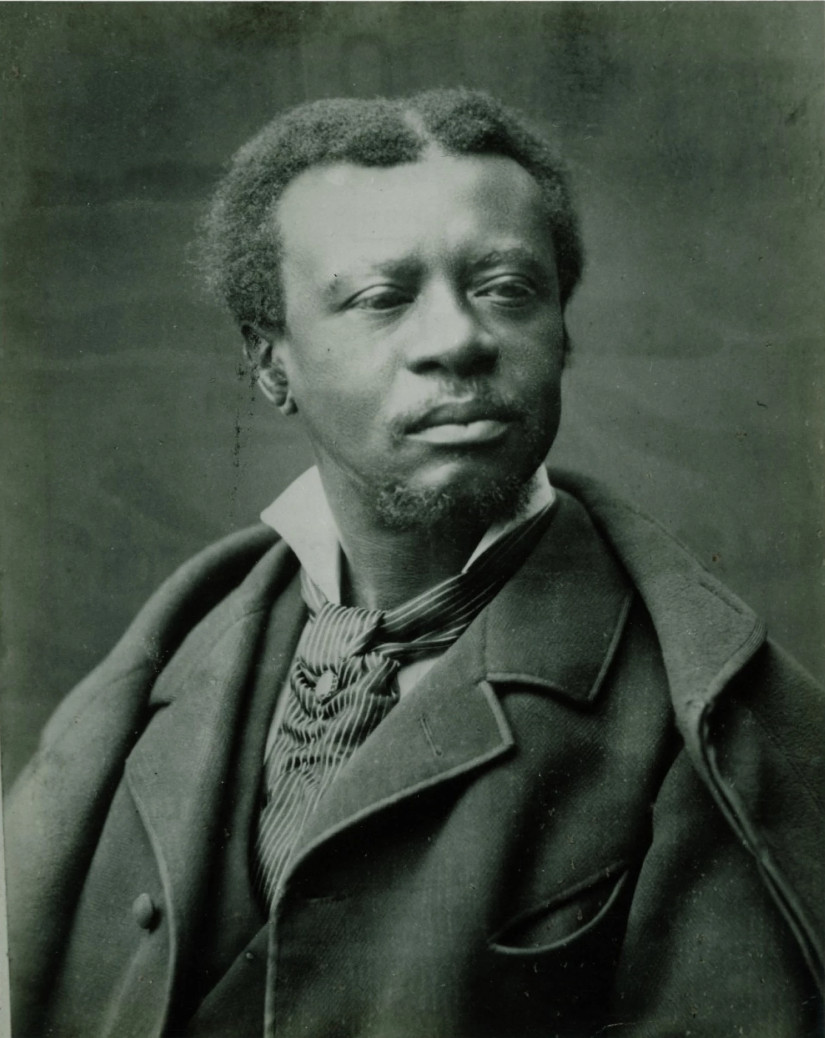

Edmond Dédé:
A Composer
Between Worlds
Edmond Dédé built a remarkable musical career that carried him from New Orleans to the theaters of France and, more than a century later, back into the story of American music.
Edmond Dédé was one of the most remarkable musicians to emerge from nineteenth century New Orleans, yet for more than a century his name was largely forgotten. A gifted violinist, conductor, and composer, he built a prolific musical career in France after racial barriers in the United States sharply limited his professional opportunities. Today, as his music returns to the stage and his long lost opera Morgiane finally receives its premiere, Dédé is increasingly recognized as one of the earliest major Black composers in American classical music.
Early Life in a Unique Musical City
Dédé was born in New Orleans on November 20, 1827, into the city’s vibrant Creole community of free people of color. This community occupied a distinctive place in the cultural life of antebellum Louisiana. Many were educated, multilingual, and deeply involved in the arts, particularly music. Yet despite their relative prosperity and cultural influence, they lived under the constant constraints of a racial hierarchy that sharply limited their opportunities.
Music entered Dédé’s life early. His father, a poultry dealer who also served as a bandmaster for a local militia unit, gave the young boy his first lessons. Dédé initially studied the clarinet before turning to the violin, an instrument on which he quickly developed a reputation as a prodigy.
Despite the racial restrictions of the time, he received an unusually rich musical education. In New Orleans he studied violin with Constantin Debergue, a respected free Black conductor, and with the Italian born composer Ludovico Gabici. He also studied harmony and counterpoint with the French Prix de Rome winner Eugene Prevost and with Charles Richard Lambert, a prominent Black musician originally from New York.
These teachers placed Dédé within a sophisticated network of musicians who moved comfortably between European classical traditions and the lively musical culture of New Orleans.
A Talent Forced Abroad
Even with his prodigious skill, Dédé encountered a harsh reality. Free musicians of color were effectively excluded in practice from full time positions in New Orleans’ major theaters. For a young composer with professional ambitions, the city offered little chance for advancement.
Like many artists in similar circumstances, Dédé began searching for opportunities elsewhere. In 1848 he briefly relocated to Mexico, seeking work as an instrumentalist before eventually returning to New Orleans.
During this time he supported himself as a cigar maker while continuing to perform and compose. The work was demanding, but it allowed him to save enough money to pursue the dream that many ambitious musicians of the era shared: study in Europe.
In 1852 he published the song Mon pauvre cœur, which is considered the oldest surviving piece of sheet music written by a New Orleans Creole of color.
A few years later he finally made his move abroad. Because Louisiana law restricted the movements of free people of color, he is believed to have traveled under a Mexican passport stating he was born in Veracruz. This kind of evasive strategy was often necessary for Black Americans seeking artistic freedom in the nineteenth century.
Studies in Paris
Dédé arrived in Paris in the mid 1850s hoping to study at the prestigious Paris Conservatoire. Older accounts often claim that he was admitted to the institution, but more recent research suggests a different story.
He was older than the age limit for many Conservatoire programs, so he instead audited classes and studied privately with several of its most distinguished faculty members, including the celebrated violinist Jean Delphin Alard and the composer Fromental Halévy.
Like many young musicians in Paris, Dédé supported himself by performing while continuing his studies. The experience immersed him in the musical language of French grand opera and operetta, influences that would remain central to his own compositions.
A Long Career in Bordeaux
Around 1860 Dédé settled in Bordeaux, where he would spend most of the rest of his life. He began working as a répétiteur and assistant conductor for the ballet at the city’s Grand Théâtre.
Although he later exaggerated this position when describing his career back home, the work placed him within one of France’s important regional opera houses.
His true professional success came in the city’s popular entertainment venues. For decades he served as music director and conductor for major café concert theaters including the Alcazar and later the Folies Bordelaises. These establishments attracted large audiences eager for lively orchestral music, dance tunes, and theatrical spectacles.
Dédé thrived in this environment. Over the course of his career he composed over 200 works including dances, songs, operettas, ballets, overtures, and chamber music. His music blended the elegance of French operatic style with the rhythmic vitality of Caribbean and New Orleans traditions.
Even while living in France, his reputation reached across the Atlantic. In 1865 his Quasimodo Symphony was performed in New Orleans by an orchestra led by the Black conductor Samuel Snaër Jr., demonstrating that his music remained known in the city where he had grown up.
A Composer with a Playful and Subversive Voice
Dédé was not only prolific but also inventive.
His surviving orchestral work Méphisto Masqué reveals a composer with a mischievous sense of humor. In one remarkable section he scored twelve parts for mirlitons, a type of kazoo like instrument popular in French musical comedy. The piece was dedicated to “bigotophonistes,” a pun that some modern conductors interpret as a sly jab at racial bigotry.
He also delighted in unusual instrumental colors. In the same work he wrote a virtuoso passage for the ophicleide, a brass instrument that the composer Hector Berlioz had famously warned should never attempt such agile music.
These touches suggest a composer who enjoyed bending the expectations of the musical establishment.
Morgiane and a Radical Reimagining
Dédé’s most ambitious work was his four act opera Morgiane, ou, Le Sultan d’Ispahan, completed in 1887.
The opera draws loosely from the tale of Ali Baba and the Forty Thieves, but Dédé and his librettist transformed the story in an important way. In traditional versions Morgiane is an enslaved woman. In Dédé’s version she is a free woman and an equal partner who ultimately saves her family.
For historians this change is more than a simple narrative tweak. Dédé grew up in New Orleans, which was the largest slave market in the United States. Some historians interpret this change as reflecting Dédé’s experience within the complex social world of Creole New Orleans.
Although the opera was never staged during his lifetime, it stands today as the earliest known complete opera written by an African American composer.
The Dramatic Homecoming
After nearly four decades in Europe, Dédé returned to the United States in 1893.
The journey itself became legendary. His ship encountered a violent storm and was forced to dock in Galveston, Texas, where he was stranded for weeks. Newspapers eagerly reported the fate of his prized violin, though accounts disagreed about whether it was saved or lost.
When he finally reached New Orleans he was greeted with great enthusiasm. Audiences packed his concerts, eager to celebrate a musician who had achieved success abroad.
At his farewell performance he surprised listeners by ending the program not with a virtuosic violin showpiece but with a banjo and guitar encore that turned the evening into something closer to a dance.
Yet the trip was also sobering. The South he returned to was increasingly defined by Jim Crow laws and the failures of Reconstruction.
Realizing that the country of his birth still offered little place for him, Dédé returned permanently to France the following year.
Before leaving he performed a song titled La Patriotisme, whose lyrics lamented a homeland that refused his love.
A Legacy Lost and Found Again
Despite his long career and hundreds of compositions, Dédé’s music gradually faded from memory after his death in 1901. Shifting musical tastes and the historical marginalization of Black composers meant that his name disappeared from many standard music histories.
He was buried in Paris, and the precise location of his grave is uncertain.
The rediscovery of his music began only in the late twentieth century when conductor Richard Rosenberg located and reconstructed several of his orchestral scores in Paris.
An even more dramatic discovery followed when the manuscript of Morgiane was found among a collection of music at Harvard University.
In 2025, 138 years after it was written, the opera finally received its world premiere in performances in New Orleans, Washington D.C., and New York.
The New Orleans staging carried particular symbolism. The performance took place in St. Louis Cathedral, the same building where Dédé had been baptized as an infant nearly two centuries earlier.
Reclaiming a Forgotten Pioneer
Today Edmond Dédé is increasingly recognized as a foundational figure in American classical music. His life reveals a musical world far richer than the traditional narratives of nineteenth century American music often suggest.
Long before jazz transformed New Orleans into a global musical capital, Black musicians in the city were already composing operas, symphonies, and chamber music rooted in European traditions while drawing on the cultural influences of the Caribbean and the Americas.
Dédé’s rediscovered works remind us that this tradition was never absent. It was simply overlooked.
As performers and scholars continue to revive his music, Edmond Dédé is finally returning to the story of American music where he has always belonged.
Sources and Further Reading
Bailey, Candace. Program Notes for Morgiane. In Homecoming: Edmond Dédé’s Morgiane. The Historic New Orleans Collection, 2025.
Bishop, Victoria. Edmund Dédé (1827–1903). BlackPast.org, 2013.
Buzard, Katie. Edmond Dédé: An American in Paris. Illinois Public Media, 2023.
Edmond Dédé. Wikipedia.
Hanson, Christopher T. F. A Survey of Sources Related to Edmond Dédé: Nineteenth-Century New Orleans Violinist, Composer and Conductor. Thesis, 2009.
Hanson, Christopher T. F. An Analytical View of Edmond Dédé’s Méphisto Masqué: Polka Fantastique. Thesis, 2011.
Joseph, Givonna. Reflections on Morgiane. In Homecoming: Edmond Dédé’s Morgiane. The Historic New Orleans Collection, 2025.
McCoy, Patrick D. Edmond Dédé, America’s First Black Opera Composer. Early Music America, 2025.
McKee, Sally. Edmond Dédé: A Brief Biography. In Homecoming: Edmond Dédé’s Morgiane. The Historic New Orleans Collection, 2025.
Naxos Records. Biographical Overview of Edmond Dédé.
Sammut, Andrew J. Edmond Dédé’s Morgiane: A Hit Opera, 138 Years Late. Early Music America, 2026.
Sullivan, Lester. Composers of Color of Nineteenth-Century New Orleans: The History Behind the Music. Black Music Research Journal, 1988.
Yohannes. Edmond Dédé – The Classical Composer No One Talks Of. YouTube transcript.