
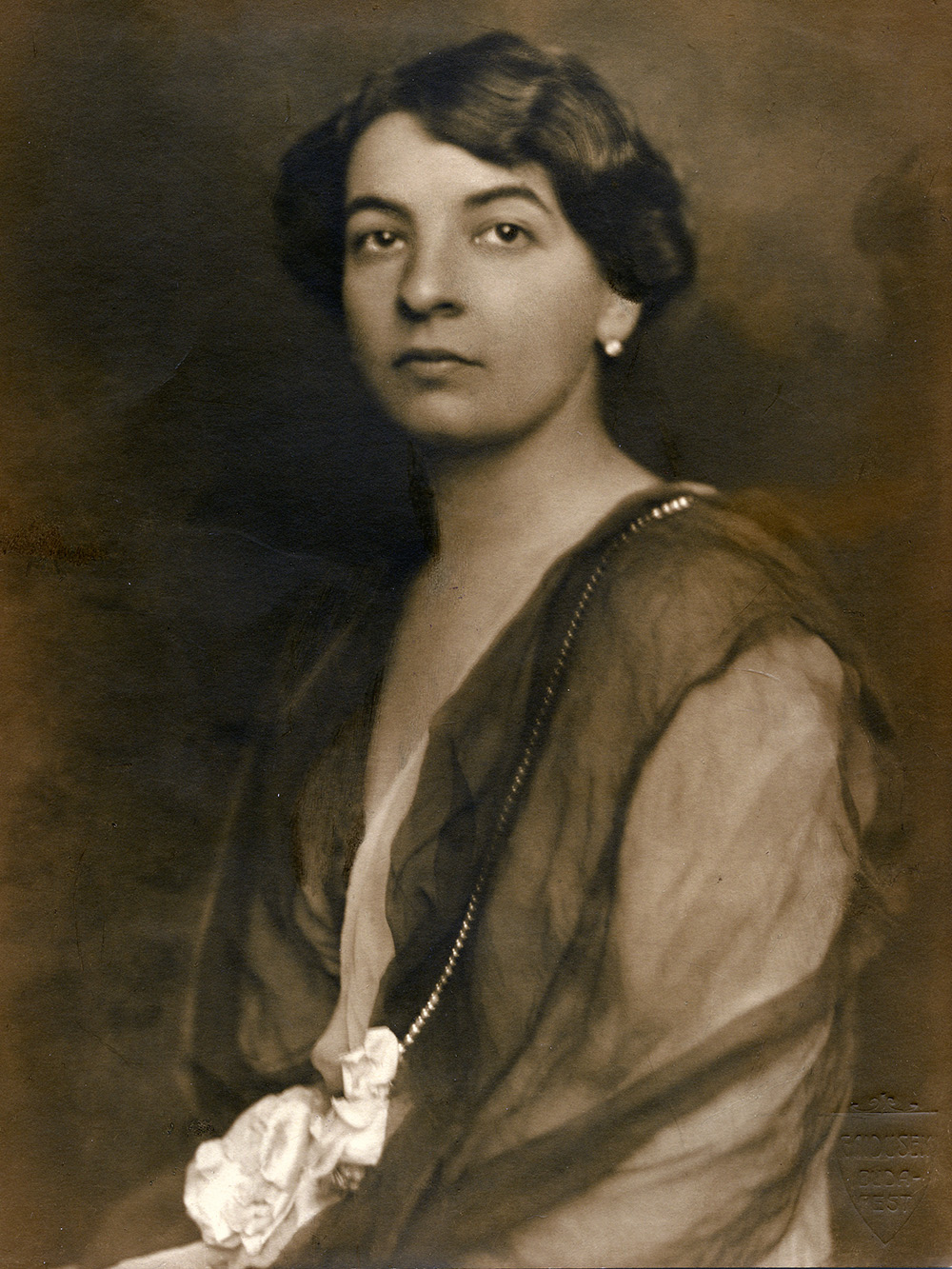

Dora Pejačević: Croatia’s Aristocratic Modernist Composer
There are women whose lives sing like symphonies, and then there are women who write the symphony themselves, note by aching note. Dora Pejačević was one of the latter.
Born in 1885 in Budapest to a Croatian count and a Hungarian pianist-baroness, Dora grew up in Našice Castle, surrounded by the trappings of nobility: crystal chandeliers, English governesses, and an education that could have produced a perfectly respectable socialite. But Dora had other plans. Rather than becoming the well-mannered aristocrat everyone assumed she’d be, she quietly dismantled the rules of her class through her choices: in music, in life, and ultimately, in death.
She began composing at age 12. By 28, she was the first Croatian composer to write a piano concerto. Though she studied across Europe, she remained largely self-taught, relentlessly driven, full of yearning, and increasingly skeptical of a world that measured people by lineage rather than contribution.
Her early pieces lived in the cozy world of Romanticism, with hints of Chopin and the dazzle of salon music, but beneath the elegance, something restless stirred.
World War I changed everything.
While many of her fellow aristocrats remained sheltered from the conflict, Dora volunteered as a paramedic on the Eastern Front, bandaging wounds, comforting the dying, and absorbing horrors no training could prepare her for. The experience transformed her. Her music, once lush and Romantic, grew darker, heavier, more introspective.
The war stripped away any remaining illusions she had about aristocracy, privilege, or the usefulness of beauty for beauty’s sake. What remained was clarity. Grief. And music that no longer asked to impress but to speak.
In the years that followed, Dora composed with sharpened purpose. Between 1913 and 1918, a time of global chaos and personal reckoning, she created some of her most profound and technically daring works.
Her Piano Concerto in G minor, the first ever composed by a Croatian, set the stage. But it was her Symphony in F-sharp minor, completed during the war and later premiered in Dresden, that cemented her as a force of modern Croatian music. Dark, unflinching, and emotionally vast, the symphony pulsed with grief and insight.
Her chamber works from this period, like the Piano Quintet in B minor, the Slavonic Violin Sonata, and the Trio in C major, were equally bold, filled with emotional depth and structural precision. And she wasn’t just impressing concert audiences: her setting of Karl Kraus’s poem Verwandlung caught the attention of the poet himself, who shared it with popular composer Arnold Schönberg.
Schönberg praised the piece and suggested it deserved a public performance in Vienna, though he also reportedly expressed surprise that a woman had composed it. Dora’s talent spoke louder than prejudice, but it wasn’t immune to it.
She died of complications from childbirth at just 37 years old, shortly after the birth of her son, Theo. She was living in Munich at the time, far from her beloved Našice. Even in death, she thought of others, requesting that donations be made to musicians in need. And she took authorship of her farewell as she had her life: quietly, deliberately, and on her own terms.
Her epitaph, which she composed herself, reads only: “Dora. Rest now.”
And yet her music lingers. It doesn’t rest. It stirs.
Maybe it’s time we let it stir something in us, too. Dora Pejačević had wealth, talent, and every excuse to look away, but she didn’t. She chose to serve. She chose to listen. In an age of billionaires playing demagogue from gilded platforms and power-hungry autocrats dehumanizing everyone who isn’t considered in their “league,” her legacy reminds us that true nobility isn’t inherited; it’s chosen.
We could use a little more of that today, more people of any class who are willing to stand up, speak out, and care.
Dora’s story gives us a lot to sit with: art, war, class conflict, unexpected nobility, and maybe even a small existential spiral or two. But after a long reckoning, what do we humans tend to reach for?
Something warm. Something shared. Something made with time and intention.
Below you’ll find three Croatian dishes that, in their own ways, reflect the worlds Dora Pejačević moved between: the rustic and the refined, the communal and the quietly radical. They won’t solve the problems of the world, but they might just feed the part of us that’s still willing to try.
Check out some foods from Dora’s home country on EatsyGeeksy!