
Category: Uncategorized

  • Peakin’ Perseids, Batman! The Perseid meteor shower peaks August 11-13

    Peakin’ Perseids, Batman! The Perseid meteor shower peaks August 11-13

    The Perseids are one of the most beloved meteor showers of the year, partly because they are reliable, partly because they can produce bright, beautiful meteors, and partly because they arrive in August, when standing outside in the middle of the night feels slightly less like a punishment issued by a cold and indifferent universe.

    This year, the Perseids are expected to peak around August 12-13, with the best viewing likely in the late-night and pre-dawn hours. The shower is active for weeks, so you may see Perseid meteors before or after the peak, but the nights around August 11, 12, and 13 are the ones to circle on your calendar.

    What Are the Perseids?

    The Perseids are a meteor shower caused by debris from Comet 109P/Swift-Tuttle.

    As Earth travels around the Sun, it passes through streams of dust and tiny fragments left behind by comets. When those particles hit Earth’s atmosphere at tremendous speed, they burn up, creating the bright streaks we call meteors.

    Most meteors are not large objects crashing toward Earth. They are usually tiny bits of cosmic grit meeting our atmosphere with dramatic flair.

    The Perseids are named for the constellation Perseus because the meteors appear to radiate from that part of the sky. That does not mean you have to stare directly at Perseus all night. In fact, it is usually better to look at a broad area of open sky and let your peripheral vision do some of the work.

    Think of Perseus as the shower’s apparent starting point, not your assigned homework spot.

    Why Are the Perseids So Popular?

    Several reasons.

    First, they are dependable. The Perseids return every year, usually peaking in mid-August.

    Second, they can be bright. Perseid meteors are known for moving quickly and sometimes leaving glowing trails, or “wakes,” behind them.

    Third, they are comfortable to watch compared with some other major meteor showers. The Geminids in December are wonderful, but December stargazing has a strong “why do I have bones?” quality. August, by comparison, is much kinder.

    The Perseids are also especially good for casual skywatchers. You do not need a telescope. You do not need binoculars. You do not need special training, complicated equipment, or the ability to pronounce “Swift-Tuttle” with scholarly authority.

    You just need a dark sky, patience, and the willingness to look up.

    When Should You Watch?

    The best time to watch the Perseids is usually after midnight and before dawn.

    That is when your location on Earth has turned into the direction Earth is moving through space, so the sky tends to collect more meteors. It is a little like driving through a swarm of bugs: your windshield gets more action than the rear window.

    For 2026, the peak is expected around August 13 in Universal Time, which makes the mornings of August 12 and 13 especially promising for North American viewers. The night of August 11 into the morning of August 12 may also be worth watching, and August 14 may still offer a decent chance if your skies are clear.

    The shower does not flip on and off like a porch light. It builds, peaks, and fades. If the weather refuses to cooperate on one night, try another.

    The sky is ancient. It can handle a rain date.

    Where Should You Look?

    Find the darkest sky you can safely reach.

    City lights will wash out many of the fainter meteors, so a darker location can make a huge difference. If you are in a city, you may still see the brightest meteors, but you will miss many of the softer ones.

    Once you are outside, give your eyes time to adjust. Twenty to thirty minutes away from bright lights can help. Avoid checking your phone if you can, because nothing says “I would like to ruin my night vision” like one quick blast from the Rectangle of Doom.

    Look generally toward the darkest, clearest part of the sky. You do not need to focus only on the constellation Perseus. The meteors may appear anywhere overhead, even though their paths seem to trace backward toward Perseus.

    The best viewing setup is deeply technical and requires advanced equipment, by which I mean a reclining chair, a blanket, bug spray, snacks, and possibly a hoodie, because August nights can still get rude.

    Do You Need a Telescope?

    Nope.

    In fact, a telescope is the wrong tool for meteor watching. Telescopes show you a small, magnified patch of sky. Meteor showers reward a wide view.

    Your eyes are the right instrument. They have excellent sky-scanning software already installed, though the battery life is questionable if you stayed up too late scrolling earlier.

    Lie back, get comfortable, and let your gaze relax. Meteor watching is not a hunt so much as a waiting game. The more sky you can see, the better.

    What Is Comet Swift-Tuttle?

    Comet 109P/Swift-Tuttle is the parent body of the Perseid meteor shower.

    Every time Swift-Tuttle travels around the Sun, it leaves dust and debris behind in its orbit. Earth crosses that debris stream every year, and the result is the Perseids.

    The comet itself takes about 133 years to orbit the Sun. It last came closest to the Sun in 1992 and is expected to return in 2125.

    So while the comet is not currently swinging by the neighborhood, its cosmic crumbs are still out there, turning into bright streaks of light when Earth passes through them.

    A meteor shower is basically the universe saying, “I made glitter, but make it physics.”

    Is There Any Symbolic Meaning?

    Astronomically, the Perseids are debris from a comet colliding with Earth’s atmosphere.

    Symbolically, though, meteor showers are hard not to love.

    They are fleeting. Bright. Unexpected. They reward patience and attention. You can stare at the sky for several minutes and see nothing, then suddenly a streak of light cuts across the dark and vanishes before you can even point.

    There is something useful in that. The Perseids can be a reminder that not everything worth noticing announces itself in advance. Some things are brief and still beautiful. Some things are old debris catching fire in a new atmosphere. Some things arrive only when you are willing to sit quietly in the dark.

    Which is annoying, frankly, because sitting quietly in the dark is not one of modern life’s more encouraged skills. But the meteors make a good case for it.

    How to Make a Night of It

    If you want to turn Perseid-watching into a small ritual, keep it simple. Go outside after midnight. Let your eyes adjust. Name one thing you are ready to let burn away. Name one thing you hope to notice more often. Watch the sky without trying to control it.

    Bring someone you love if you have someone willing to sit in the dark and mutter “was that one?” every few minutes. Or go alone and let the night be yours.

    No candles required. No complicated setup. No telescope. No perfect location. Just a little darkness, a little patience, and a willingness to be impressed.

    The Takeaway

    The Perseid meteor shower is one of the best annual sky events for casual stargazers. It is bright, reliable, easy to watch, and beautifully timed for late summer nights.

    This year, the peak falls around August 11-13, with especially good chances in the early morning hours of August 12 and 13.

    Find a dark place. Look up. Give yourself time.

    The sky is throwing sparks again.


    Featured image: Original artwork © 2026 by Sunny Simmons.

  • Maurice Ravel: Duty, War, and the Music of Memory

    Maurice Ravel: Duty, War, and the Music of Memory

    Night on the road to Verdun, 1916. A small military truck crawls forward without headlights, its driver navigating by memory and instinct along a shattered road. The vehicle is overloaded with fuel and ammunition, its engine straining as artillery thunders somewhere beyond the darkness. One direct hit would detonate the cargo.

    At the wheel sits Maurice Ravel. Wrapped in a heavy fur coat against the cold and wearing a steel helmet far too large for his slight frame, the composer guides the vehicle slowly toward the front lines. Like thousands of other drivers in the French motor transport corps, his task dangerous and unglamorous: keep the guns supplied.

    It is difficult to imagine a more unlikely soldier. Only a few years earlier, Ravel had been known primarily as the meticulous creator of some of the most delicate music ever written. Igor Stravinsky once described him as “the most perfect of Swiss watchmakers.” Yet here he was, driving a supply truck through one of the most brutal battles in modern history.

    The fact that Maurice Ravel was at Verdun at all was something of a minor miracle. When the First World War began in 1914, the French army had little interest in accepting him; he was nearly forty, physically slight, and already one of France’s most celebrated composers.

    Ravel seemed far more at home in the refined salons of Paris than in the brutal realities of modern warfare. Yet he repeatedly attempted to enlist. His persistence reflected a conviction that the conflict exposed a moral imbalance: wars were planned by men of power and privilege, while their human cost fell largely on ordinary people. He did not believe his own status entitled him to stand apart.

    To understand this obligation mattered so deeply to Ravel, it helps to understand the man he was before the war.

    A composer before the war

    Maurice Ravel was born in 1875 in the Basque town of Ciboure, near the Spanish border, far from the political and military centers that would later send him to war. His mother, Marie Delouart, was Basque; his father, Joseph Ravel, was a Swiss engineer and inventor, and the household reflected values of craft and precision rather than martial tradition. The family moved to Paris when Maurice was only a few months old, and the city, with its conservatories and salons, became the fixed center of his artistic life.

    At the Paris Conservatoire, Ravel quickly developed a reputation for brilliance, along with a resistance to institutional authority. He clashed repeatedly with the school’s conservative traditions and never secured its most prized academic honors despite clear evidence of his talent. His repeated rejection by the Prix de Rome jury culminated in a public scandal, exposing the rigid hierarchies and political calculations that governed official recognition in the French musical establishment.

    Outside the Conservatoire, however, Ravel thrived by defining success for himself. By the early twentieth century he had emerged as one of the most distinctive composers in France, his work often set alongside that of Claude Debussy. Pieces such as Jeux d’eau and Gaspard de la nuit revealed his defining traits: jewel‑like textures, technical precision, and an almost obsessive attention to detail, qualities rooted in balance, refinement, and extraordinary control.

    Privately, Ravel was known for his elegance, his meticulous habits, and his deep devotion to his mother. The image he cultivated was that of a refined artist, almost a dandy, committed to craft and precision rather than overt emotional display.

    War would test not only that identity, but whether such discipline and restraint could survive the demands of violence.

    The war begins

    When France mobilized in August 1914, Ravel was working feverishly on his Piano Trio in A minor. Knowing he might soon be called to serve, he forced himself to complete the work at a near-impossible pace. Writing to Igor Stravinsky, he described the experience with dark humor: he had finished “five months’ work in five weeks,” working with the “lucidity of a madman.” Half joking, he even referred to the trio as a “posthumous work.”

    Once the piece was finished, he attempted to enlist.

    The French military, however, saw little use for a composer barely over five feet tall and underweight. Ravel hoped to become an aviator, believing his small stature might suit the cramped cockpits of early aircraft. Instead, he was rejected repeatedly due to his age, weight, and a minor heart condition. For Ravel, these refusals were humiliating.

    At a time when French culture equated military service with civic virtue, remaining behind the lines carried a powerful social stigma. Men who avoided the front were labeled embusqués – shirkers hiding safely from danger. Intellectuals and artists felt this pressure acutely. Even Claude Debussy expressed shame that illness prevented him from serving.

    Ravel refused to accept exemption. After months of persistence, he finally succeeded.

    Ravel at the front

    In March 1915, Ravel was accepted into the French army’s motor transport corps as a truck driver in the 13th Artillery Regiment. It was not the role he had sought, but he accepted it without hesitation. The assignment may have seemed mundane, but it was anything but safe.

    Truck drivers carried ammunition and fuel directly to the front lines, often at night and without headlights to avoid enemy fire. During the Battle of Verdun in 1916, Ravel navigated these routes himself, guiding his truck over shattered roads under constant bombardment. He affectionately named his military transport truck Adélaïde.

    The conditions were brutal. Open truck cabs exposed drivers to freezing weather and shrapnel. Ravel wore a steel helmet and an enormous fur coat to survive the cold. Writing about his experience, he described traveling over “unbelievable roads with a load double what my truck should carry,” always in range of enemy guns.

    Even amid the devastation of Verdun, Ravel’s sensitivity to beauty remained intact. In a brief pause between artillery barrages, he heard a small bird singing. The fragile sound struck him deeply. For a time he considered composing a piece titled La fauvette indifférente (“The indifferent warbler”), though the work was never completed.

    Such moments of calm were rare. More often, the war confronted him with exhaustion, danger and, increasingly, with loss.

    Loss and isolation

    The human cost of the war soon pressed in on Ravel. Several close friends were killed during the conflict, including Joseph de Marliave, Jacques Charlot, and the Gaudin brothers.

    But the most devastating blow came in January 1917. While Ravel was on medical leave recovering from illness and frostbite, his beloved mother died. Her death plunged him into profound despair. Friends later noted how deeply the loss marked him.

    The psychological toll of the war became increasingly difficult to bear. In letters from the period, Ravel described feelings of isolation and emotional exhaustion. In one candid reflection, he admitted that he had never considered himself brave, but that he had been drawn into the war partly by a restless curiosity about experience itself.

    By mid-1917, his deteriorating health forced the army to discharge him from service. He returned to civilian life physically weakened and emotionally altered.

    Music after the war

    Ravel’s wartime experiences left their clearest musical imprint in one of his most remarkable works: Le Tombeau de Couperin.

    Completed in 1917, the suite was modeled on the elegant dance forms of the French Baroque. At first hearing, the music sounds light, graceful, even playful. Yet each movement carries a dedication, honoring a friend who died in the war.

    The contrast between the suite’s cheerful surface and its tragic purpose puzzled many listeners. When critics questioned the apparent mismatch, Ravel responded with characteristic restraint: “The dead are sad enough, in their eternal silence.”

    Rather than writing overtly tragic music, Ravel chose something quieter. The piece remembers individuals rather than dramatizing their deaths. In this sense, it functions less as a lament than as an act of remembrance.

    For Ravel, memory itself became the monument.

    The war’s quiet legacy

    The years following the war revealed subtle but lasting shifts in how Ravel’s music carried meaning.

    Some scholars see a decisive shift in his style. Works such as Frontispice and La Valse contain startling moments of dissonance and violence, which some interpret as reflections of wartime trauma and psychological shock.

    Others argue that Ravel’s essential aesthetic remained unchanged. His fascination with historical forms, elegant surfaces, and emotional distance had already emerged before 1914. In this view, the war did not transform his musical language so much as deepen the meaning carried by it.

    What is certain is that the war altered Ravel’s life profoundly. His compositional output slowed, and friends noted a persistent melancholy in his personality. Many of his later works were written for people whose lives had been shaped by the same conflict. One of the most striking examples came years later, when he composed the Piano Concerto for the Left Hand for the Austrian pianist Paul Wittgenstein, who had lost his right arm in the trenches.

    The war’s presence in Ravel’s music is rarely explicit. Instead, it lingers in quieter ways: in acts of dedication, in fragments of memory, in music that remembers without mourning aloud.

    Duty, war, and memory

    The image of Maurice Ravel driving a supply truck through the chaos of Verdun sits uneasily beside the delicacy of the music he composed. Yet that contrast reveals something essential about him. Ravel did not respond to war by abandoning his identity as a craftsman. Instead, he allowed his craft to carry the weight of memory.

    The result was music that honors loss without spectacle, grief without sentimentality. In a century scarred by violence, Ravel’s answer to war was not noise or protest. It was remembrance.


    Sources and Further Reading

    Blain, Terry. “What did Maurice Ravel do during World War 1?” Classical Music. July 21, 2022.

    Buja, Maureen. “The Dead Are Sad Enough: Ravel’s Le tombeau de Couperin.” Interlude. May 12, 2022. https://interlude.hk/?p=109718.

    Goss, Madeleine. Bolero: The Life of Maurice Ravel. New York: Tudor Publishing Company, 1940.

    Haylock, Julian. “Ravel’s Daphnis et Chloé: we delve into this sensuous masterpiece and its best recordings.” Classical Music. April 8, 2022.

    Hogstad, Emily E. “The Tragedy and Trauma of Ravel’s Military Service.” Interlude. January 28, 2026. https://interlude.hk/?p=144011.

    Jaffé, Daniel. “French composers: the 21 greatest musicians France has produced.” Classical Music. March 30, 2025.

    Kilpatrick, Emily. “Maurice Ravel and the Poetics of Originality, 1907–14.” Music & Letters. 2024.

    La, Tin Vi. Maurice Ravel’s Le Tombeau de Couperin: Human emotions, grief, and the history of the Tombeau. Doctor of Musical Arts Document, James Madison University, August 11, 2023. https://commons.lib.jmu.edu/diss202029/103.

    Larner, Gerald. “This composer’s personal life was an enigma. His music is a thing of wonder.” Classical Music. October 27, 2025.

    “Maurice Ravel.” War Composers. Accessed March 8, 2026.

    “Maurice Ravel.” Wikipedia. Last modified March 1, 2026. https://en.wikipedia.org/w/index.php?title=Maurice_Ravel&oldid=1341173433.

    Mawer, Deborah, ed. The Cambridge Companion to Ravel. Cambridge: Cambridge University Press, 2000.

    Parr, Freya. “17 December: Ravel and Vaughan Williams’ food-based friendship.” Classical Music. December 17, 2017.

    Predota, Georg. “7 March: Maurice Ravel Was Born.” Interlude. March 7, 2022.

    Quendel, Gregor. “Maurice Ravel – Biography & Compositions.” Classicals.de. 2026.

    “Ravel’s ‘Le Tombeau de Couperin’.” NPR. August 21, 2008.

    Rogers, Jillian Corinne. Grieving Through Music in Interwar France: Maurice Ravel and His Circle, 1914-1934. PhD diss., University of California, Los Angeles, 2014.

    Walsh, Stephen. “Who Was Maurice Ravel? A Brief Introduction.” Chamber Music Society of Lincoln Center. Accessed March 8, 2026.

  • NewsGame+ November 02-08


    Amazon’s Mass Effect TV Show Set After Trilogy

    The long-rumored Mass Effect TV series is finally materializing, and Amazon’s adaptation will boldly go beyond Commander Shepard’s story.

    Set after the original trilogy, the show aims to explore the post-war galaxy without rehashing old ground or old heroes. Fans are cautiously optimistic (read: terrified) that the absence of Shephard means more freedom… and more room to mess things up. Meanwhile, BioWare’s new Mass Effect game remains in active development, though no release window has been confirmed.


    Vampire: The Masquerade Bloodlines 2 Budget Revealed

    Turns out being undead doesn’t make you cheap. Analysts from Swedbank estimate the production cost of Bloodlines 2 at roughly 600million SEK (about $62 million USD) not including marketing. Considering its turbulent development history and studio changes, that figure makes sense… though players might still ask whether the game’s “humanity meter” now applies to investors.


    Grand Theft Auto VI Delayed to November 2026

    You can’t rush perfection, or apparently, Grand Theft Auto VI. Rockstar has pushed back the most anticipated game of the decade to November 2026, citing extended polishing time (and probably to avoid another employee burnout scandal).

    Fans have collectively sighed, booted up GTA Online, and resumed throwing bombs at each other.


    Marvel 1943: Rise of Hydra Delayed Beyond Early 2026

    The Captain America/Black Panther team-up game, Marvel 1943: Rise of Hydra, has been delayed with no new release window. The game, set in WWII-era Parish, had players hyped for its dual-protagonist concept, but now we’ll be waiting longer to punch Nazis in high definition.


    Rockstar Games Cites Leaking as Reason for Employee Firings

    Rockstar Games confirmed that its recent layoffs — between 30 and 40 employees — were linked to internal leaks. The company told Bloomberg that employees had “breached confidentiality agreements,” which sparked both sympathy and skepticism online.
    Fans noted the irony of a company famous for crime simulators cracking down on information theft.


    Pokémon Legends: Z-A Mega Dimension DLC Announced

    Get ready to bend space-time. Pokémon Legends: Z-A – Mega Dimension launches next month, bringing Level 100+ Pokémon battles and new regions within Hyperspace Lumiose. Trainers are already hoarding Ultra Balls and caffeine.


    Kingdom Come: Deliverance II Free to Play Weeknd

    Warhorse Studios gave players a free trial of Kingdom Come: Deliverance II on November 6, letting fans of medieval realism test-drive its refined combat and stunning worldbuilding. Reviews so far? “Like Skyrim, but you can’t shout people off cliffs.”


    PlayStation State of Play Announced for Japan/Asia

    PlayStation surprised fans with a regional State of Play event focusing exclusively on Japanese and Asian developers. Expect updates from Capcom, Bandai Namco, and a few curveballs from indie studios that keep reminding the West that yes, 2D still rules.


    Cloud Streaming Now Available on PlayStation Portal

    Sony finally flipped the switch: cloud streaming is live on the PlayStation Portal. Players can now stream PS5 games from the cloud — even if someone else is using the console. Marriages everywhere are about to be tested.


    Dispatch Sells Over 1 Million Copies

    Move over, The Boys. Dispatch, the superhero office sim where you juggle egos, powers, and HR disasters, sold 1 million copies in just 10 days. Critics call it “the funniest burnout simulator since The Stanley Parable.


    Magic: The Gathering x Avatar: The Last Airbender

    The crossover nobody saw coming but everyone wanted: MTG x Avatar. The new “Allied Forces” set introduces elemental heroes, iconic locations, and stunning card art that’ll drain wallets faster than a Fire Nation raid.


    Anime Rhythm Game Unbeatable Delayed Hours Before Launch

    In a twist worthy of its title, Unbeatable was delayed just hours before release. The anime-inspired rhythm game, once hyped as “a love letter to music and rebellion,” will now launch in December 2025. Developers apologized, saying they “refuse to drop a beat until it’s perfect.”


    Nintendo Switch 2 Sales Exceed 10 Million Units

    Nintendo’s newest console continues its record-breaking run, surpassing 10 million units sold. Critics praise its performance boost and backwards compatibility, while scalpers praise it for paying their rent.


    Fantastic Pixel Castle Studio Facing Closure

    The studio behind the ambitious fantasy MMO Fantastic Pixel Castle may be shutting down after losing funding from NetEase. Founded by a former World of Warcraft lead in 2023, the project showed promise — but in this economy, not even dragons are recession-proof.


    Dragon Quest VII Reimagined Will Feature a New Conclusion

    The Dragon Quest VII remake will feature an all-new ending, giving returning fans a reason to start their 60-hour journeys all over again. (And yes, you can still name your protagonist “Butts.”)


    Hands-On with Mewgenics

    Hands-on previews of Mewgenics describe it as “equal parts adorable, deranged, and brilliant.” The long-awaited game from the creators of The Binding of Isaac mixes tactical strategy with chaotic genetics — and somehow, it works.


    Persona Life 2026: Awakenings US Shows Announced

    Persona fans, rejoice! The Persona Live 2026: Awakenings concert tour is finally coming stateside — but only for two shows in Los Angeles. Expect stylish visuals, impossible ticket queues, and a sea of people wearing Joker masks in 90°F heat.

  • EA Games $55B Buyout Deal Raises Red Flags

    EA’s $55B Deal Raises Red Flags

    In a year already bursting with industry shakeups, record-breaking launches, and AI discourse hotter than a GPU running Starfield on ultra, Electronic Arts has managed to grab center stage, and not in the good way.

    On October 15th, EA confirmed it had entered into a $55 billion acquisition agreement with a consortium led by Saudi Arabia’s Public Investment Fund (PIF), along with U.S.-based Silver Lake Partners and Affinity Partners, the latter being a private equity firm founded by Jared Kushner. If your eyebrows just shot up, you’re not alone.

    The deal instantly became one of the largest buyouts in gaming history, placing EA’s value higher than many film studios, and signaling an unmistakable shift in how money, politics, and play are intermingling in the modern gaming landscape.

    Follow the money… and the headlines

    On the surface, EA’s official press release painted the buyout as a “strategic partnership for accelerated innovation and global reach.” (Translation: we’re cashing in.) CEO Andrew Wilson, ever the diplomat, expressed enthusiasm for “new opportunities to elevate the player experience.”

    What he didn’t mention was the absolute maelstrom already brewing around this deal. The inclusion of PIF, Saudi Arabia’s $700 billion sovereign wealth fund, has triggered alarm bells from government officials, labor unions, and a very skeptical public.

    Congress isn’t having it

    Within 24 hours of the announcement, U.S. Senators Elizabeth Warren and Richard Blumenthal released a joint statement expressing “deep concern” over the national security implications of the deal, pointing directly at PIF’s role and questioning Kushner’s cozy ties to the fund. They cited risks of foreign influence, lack of transparency, and broader geopolitical implications. Oh, and they also formally requested answers from EA’s leadership. No big deal, just Congress poking around your loot box empire.

    And it’s not just politicians raising red flags.

    Workers push back… loudly

    EA’s employees, represented by the UVW-CWA labor union, publicly condemned the acquisition and called for immediate regulatory scrutiny. Their statement cited ethical objections to Saudi Arabia’s human rights record and expressed concern over how little developers had been informed about the process before it hit the press.

    At a moment when unionization momentum is already gaining across the industry, the buyout feels like a lightning rod… or a powder keg, depending on how you look at it.

    Gamers, too, are lighting the fuse. Forums and social media are now flooded with hashtags like #BoycottEA and memes mocking the idea of “oil baron Ultimate Team packs.” One Redditor quipped, “At least now I understand why my Sims game was pushing luxury furniture so hard.

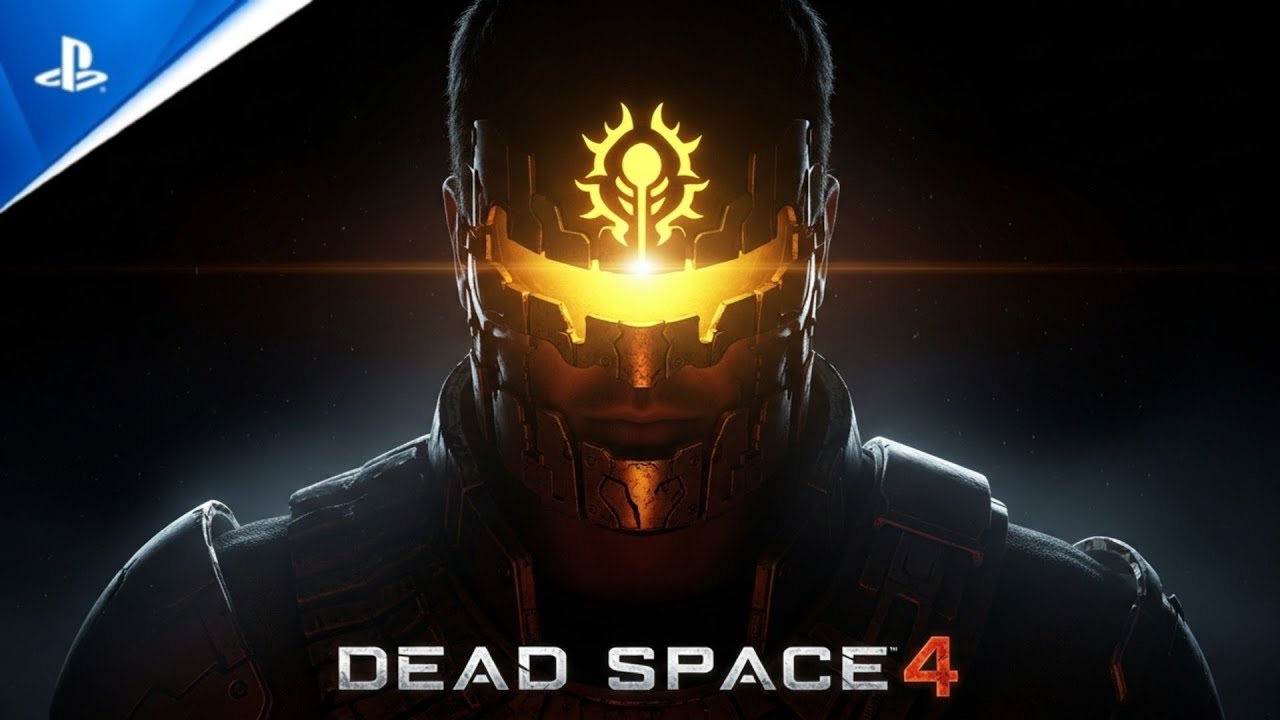
    Dead Space 4: The Unexpected Corpse Reanimation

    And just when you thought it couldn’t get weirder: Glen Schofield, creator of Dead Space and ex-CEO of Striking Distance Studios, has reportedly said he’s “already making calls” about developing Dead Space 4… for the new owners.

    According to Schofield, he believes he could save the consortium $30–40 million on the project, implying he’s offering a streamlined path to revive the dormant horror franchise without all that pesky corporate overhead. Because when a $55 billion buyout drops, who doesn’t dust off their old sci-fi corpse blender and pitch it as a value bundle?

    So…. what now?

    As of this writing, there are far more questions than answers. What happens to EA’s sprawling catalog of franchises (Battlefield, The Sims, FIFA (or EA FC), Apex Legends, Dragon Age, and more)? Will new leadership impact content, censorship, or the studio’s stance on monetization? Does this signal a deeper wave of international investment in U.S. studios, and if so, who’s next?

    For now, the industry waits. Regulatory scrutiny may delay the finalization of the deal, and if history tells us anything, those delays tend to get messy before they get resolved.

    But one thing is certain: this isn’t just a business transaction. It’s a massive turning point, not just for EA, but for how power, money, and creative control flow through the gaming industry.

    Min-maxing the gaming industry

    Gaming is no longer a niche market. It’s global, political, and wildly lucrative. So when your favorite game studio becomes the subject of congressional hearings and labor union press releases, it’s worth asking:

    Are we still talking about play? Or are we just watching capitalism speedrun itself?


    Sources

    “EA Announces Agreement to Be Acquired by PIF, Silver Lake, and Affinity Partners for $55 Billion.”
    Electronic Arts Press Release, October 15, 2025.

    Game World Observer.
    “Threat to National Security: U.S. Senators Concerned That a Saudi Fund Is Among EA’s Buyers.”
    October 16, 2025.

    PC Gamer.
    “Saudi Arabia’s Acquisition of Electronic Arts Faces Pushback from Game Developers.”
    October 16, 2025.

    Game Developer.
    “EA Employees and CWA Slam Saudi‑Led EA Buyout, Call for Regulatory Scrutiny.”
    October 16, 2025.

    Les Aventures Ludiques.
    “$55 Billion EA Sale Descends into Chaos as Workers and Lawmakers Fight the Saudi Takeover.”
    October 16, 2025.

    PC Gamer.
    “Dead Space 4? Glen Schofield’s Pitch to Save the Franchise for EA’s New Owners.”
    October 16, 2025.