Category: Portraits in Sound

  • Adolfo Mejía Navarro and the Sound of Colombia

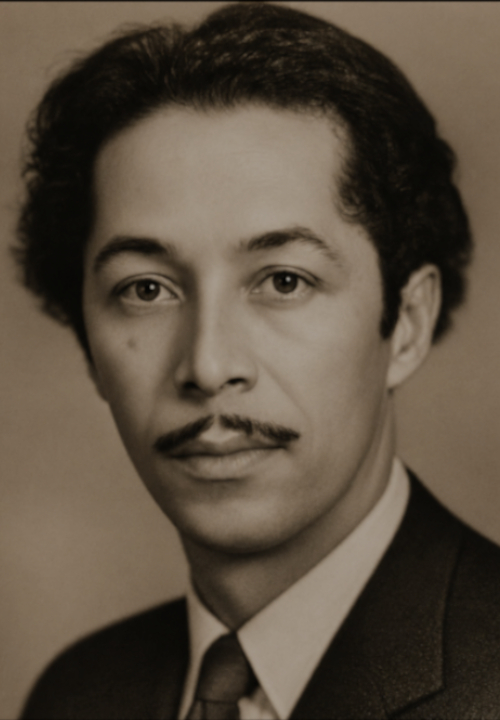
    Adolfo Mejía Navarro and the Sound of Colombia

    Every so often, Justin starts working on a piece by a composer I’ve never heard of, and I find myself tumbling down a research rabbit hole. That’s how I met Adolfo Mejía Navarro.

    This time, the piece was Preludio: Luminosidad de las Aguas (“Prelude: Luminosity of the Waters”), a shimmering piano work by a Colombian composer whose name was completely unfamiliar to me. The more I listened, the more curious I became. The piece was beautiful; it’s atmospheric and colorful, with a sense of place that feels both vivid and difficult to pin down. More importantly, it left me wondering something that has become a recurring theme in this series: how had I never heard of this composer before?

    As it turns out, I wasn’t alone. Outside of Colombia and parts of Latin America, Adolfo Mejía Navarro remains largely unknown, despite studying in Paris, writing orchestral and chamber works, composing a substantial body of piano music, and helping bring Colombian musical traditions into the classical concert hall.

    The deeper I dug, the stranger that seemed, because Mejía wasn’t merely a talented composer who happened to be overlooked. He was a composer with a voice all his own, one shaped by the streets of Cartagena, the rhythms of Colombia, the sound of the guitar, and a lifelong curiosity about the wider world.

    I can’t help feeling that more people should know his name.

    A Composer Shaped by Place

    That connection to Cartagena comes up again and again when people write about Mejía, and for good reason.

    Although he would eventually study in Paris, travel internationally, and work with some of the most influential musicians of his era, the foundations of his musical voice were laid much closer to home. Born in 1905 and raised amid the rich cultural traditions of Colombia’s Caribbean coast, Mejía grew up surrounded by a remarkable blend of influences: Indigenous traditions, Spanish melodies, African rhythms, folk dances, popular songs, and the everyday sounds of a bustling port city.

    For all of his travels, he never really left those influences behind. They followed him into his piano music, his chamber works, his songs, and eventually his orchestral compositions. Even as his musical language expanded, Cartagena remained part of the conversation.

    And if there is a key to understanding Adolfo Mejía Navarro, it may be this: before he was a composer of concert music, he was a listener.

    Cartagena sits on Colombia’s Caribbean coast, a place where cultures, languages, rhythms, and traditions have met for centuries. Indigenous influences, African influences, and European influences all left their mark on the city and the music that grew there. And long before he became a composer, Mejía absorbed those sounds as part of daily life.

    His father played the tiple, a traditional Colombian stringed instrument related to the guitar, and young Adolfo quickly developed a talent for music himself. A local priest reportedly nicknamed him “Pequeño Sarasate” after the famous Spanish violin virtuoso, impressed by the boy’s musical abilities.

    Before there was a piano or an orchestra, or a life in Paris, though, Mejía was just a kid with a guitar. That detail feels important because it helps explain something about his music. Even when he later embraced classical forms, he never lost touch with the musical traditions that surrounded him growing up.

    Following the Music

    One of the easiest ways to understand Mejía’s artistic journey is to follow the instruments.

    The guitar connected him to the music of everyday life through the songs, dances, and social gatherings of Colombia’s Caribbean coast. The piano, on the other hand, became his laboratory.

    In works such as CanditaPincho, and Luminosidad de Aguas (“Luminosity of Waters”), listeners can hear a composer experimenting with color, atmosphere, and rhythm. Some pieces feel intimate and reflective. Others dance. Many carry traces of Colombian musical traditions such as the pasillo and bambuco while still speaking the language of classical music.

    Luminosidad de Aguas is an especially evocative example. Originally written for the celebrated harpist Nicanor Zabaleta and later adapted for piano, the piece seems to shimmer with light. Even without knowing its title, many listeners might find themselves imagining sunlight dancing across water.

    Then came the orchestra.

    If the piano allowed Mejía to explore ideas, the orchestra gave him a much larger canvas on which to paint them.

    His Pequeña Suite made history as the first symphonic work to incorporate the traditional Colombian cumbia, bringing a dance form deeply rooted in the country’s Caribbean coast into the concert hall.

    Today that may not sound revolutionary. In the 1930s, however, it was a bold statement about what classical music could be and whose stories it could tell.

    Cartagena Meets Paris

    Like many ambitious young musicians of his generation, Mejía eventually traveled abroad. He lived in New York. He toured internationally. And most significantly, he studied in Paris under the legendary pedagogue Nadia Boulanger, whose students would go on to shape twentieth-century music around the world.

    Paris exposed Mejía to new ideas and influences. Listeners familiar with French composers such as Debussy and Ravel may hear echoes of impressionism in some of his piano writing: colorful harmonies, atmospheric textures, and an emphasis on mood and imagery.

    But what’s most remarkable is not what he borrowed. It’s what he kept. Even after studying in one of Europe’s great cultural capitals, Mejía never stopped sounding like himself.

    His music never feels as though Colombian elements were pasted onto European forms as an afterthought. Instead, the two traditions seem to grow naturally from the same roots.

    The result is music that feels both familiar and fresh: sophisticated without being intimidating, colorful without becoming flashy, and deeply connected to a particular place without requiring listeners to know anything about that place beforehand.

    The Bohemian of Cartagena

    The more I learned about Mejía, the more he seemed like the kind of person who would have been fascinating to spend an evening with.

    Accounts describe him as endlessly curious, widely read, and fluent in multiple languages. He reportedly spoke Arabic, Greek, German, French, Italian, and English. Friends remembered him wandering Cartagena’s streets in a white suit, guitar in hand, ready to discuss philosophy, literature, politics, or music until the early hours of the morning.

    He was not merely a composer. He was one of those larger-than-life cultural figures who seem to absorb everything around them and somehow transform it into art.

    Many of his pieces were inspired by friends, gatherings, conversations, and the people who populated his world. In that sense, his music feels almost like a diary—one written not with words but with melodies, harmonies, and rhythms.

    Why Have So Few People Heard of Him?

    This is where the story becomes a little frustrating. The question isn’t whether Mejía was talented. The question is why his music remained so difficult to discover for so long.

    Part of the answer comes down to timing. In 1939, as Mejía was thriving in Paris, World War II erupted across Europe. Like countless artists whose careers were disrupted by the conflict, he was forced to leave.

    Part of it was personality. By most accounts, Mejía was far more interested in making music than promoting himself. He often failed to organize his manuscripts, sometimes gave scores away, and showed little interest in building the sort of carefully managed legacy that helps composers remain visible after their deaths.

    As a result, many of his works spent decades scattered among archives, libraries, and private collections. For years, discovering his music required the persistence of scholars, performers, and researchers willing to track down fragile handwritten manuscripts and bring them back into circulation.

    A Hidden Treasure Worth Rediscovering

    Fortunately, that work is finally paying off. Recent editions, recordings, and research projects have made Mejía’s music more accessible than ever before. Listeners curious about Latin American classical music now have opportunities to explore a body of work that was largely unavailable to previous generations.

    And what they’ll discover is not merely a historical curiosity. They’ll discover a composer with a distinctive voice: one who carried the sounds of Colombia into the concert hall without sacrificing their character. Who moved comfortably between guitar, piano, and orchestra. Who studied in Paris but never forgot Cartagena.

    The history of classical music is much larger than the handful of names most of us learn first. Beyond the familiar landmarks lies an enormous landscape filled with overlooked voices, forgotten stories, and remarkable music waiting to be heard. Adolfo Mejía Navarro reminds us that sometimes the most rewarding discoveries happen when we wander off the well-traveled path. And if you’re willing to take that detour, Colombia’s Caribbean coast has a treasure waiting for you.


    Sources and Further Reading

    Adolfo Mejía Navarro Official Site. https://www.adolfomejianavarro.com/adolfomejianavarro-english

    “Adolfo Mejía Navarro.” Sincé Sucre Colombia Blog, March 13, 2012. https://since-sucre-colombia.blogspot.com/2012/03/adolfo-mejia-navarro.html

    Angulo Julio, Alvaro Jose. Colombian Composer Adolfo Mejía, Four Works for Small Ensembles. Doctoral Dissertation, Louisiana State University, 2017. https://repository.lsu.edu/gradschool_dissertations/4214

    Duque, Ellie Anne. “Adolfo Mejía Navarro (1905-1973) y su obra para piano.” Biblioteca Virtual del Banco de la República, 2001. https://web.archive.org/web/20120603125305/http://www.banrepcultural.org/blaavirtual/musica/blaaaudio/compo/mejia/indice.htm

    Grupo INTERDÍS. “Dosier: partituras originales del maestro Adolfo Mejía Navarro.” Revista de Extensión Culturalhttps://medellin.unal.edu.co/revista-extension-cultural/images/revista/rec59/REC_59-82-87.pdf

    Likosova, Galina, and Hernán Humberto Restrepo (Directors). Viajero de mí mismo [Documentary film], 2005. https://www.youtube.com/watch?v=2ZMJIZKLwmE

    Muñoz, Enrique Luis. Adolfo Mejía: La Musicalia de Cartagena. Cartagena: Alcaldía Mayor de Cartagena, 1994. https://repository.lsu.edu/gradschool_dissertations/4214

    Muñoz, Enrique Luis. Adolfo Mejía: Viajero de si Mismo. Cartagena: Ediciones Pluma de Mompox, 1994.

    Parra, Fernando. Contextualización De La Pequeña Suite De Adolfo Mejía. Master’s thesis, Universidad Nacional de Colombia, 2015. https://repositorio.unal.edu.co/items/5707127f-72da-4ac4-ac12-2fa9c4fcc2c9

    Swoboda, Miroslav. La Obra Del Compositor Adolfo Mejía: Armonía Expresada En Paisajes Sonoros Y Humanos. Master’s thesis, Universidad de Bellas Artes y Ciencias de Bolívar, 2015. https://scispace.com/pdf/colombian-composer-adolfo-mejia-four-works-for-small-1bw4nd1e.pdf

    Vanegas Escobar, Natalia. Preludios Colombianos: A Recording Project Of The Piano Preludes By Adolfo Mejía And The Preludes Op.48 And Op.56 By Guillermo Uribe Holguín. Doctoral Dissertation, University of Memphis, 2025. https://digitalcommons.memphis.edu/cgi/viewcontent.cgi?article=4905&context=etd

  • Thomas “Blind Tom” Wiggins and Water in the Moonlight: Reclaiming an American Original

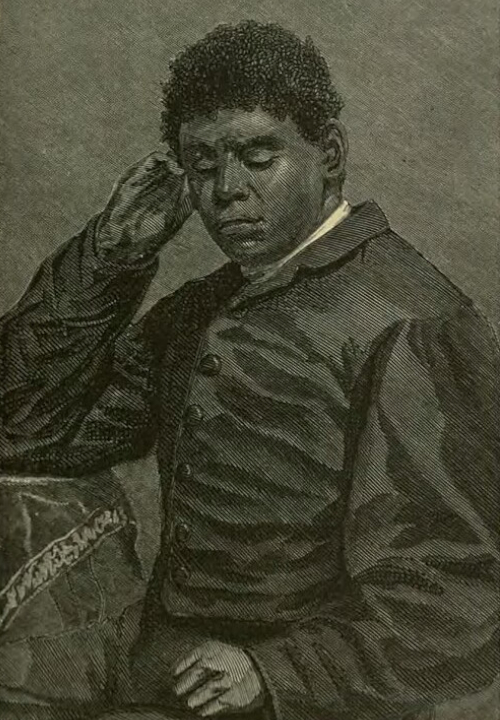
    Thomas “Blind Tom” Wiggins and Water in the Moonlight: Reclaiming an American Original

    Edmond Dédé was one of the most remarkable musicians to emerge from nineteenth century New Orleans, yet for more than a century his name was largely forgotten. A gifted violinist, conductor, and composer, he built a prolific musical career in France after racial barriers in the United States sharply limited his professional opportunities. Today, as his music returns to the stage and his long lost opera Morgiane finally receives its premiere, Dédé is increasingly recognized as one of the earliest major Black composers in American classical music.

    Early Life in a Unique Musical City

    Dédé was born in New Orleans on November 20, 1827, into the city’s vibrant Creole community of free people of color. This community occupied a distinctive place in the cultural life of antebellum Louisiana. Many were educated, multilingual, and deeply involved in the arts, particularly music. Yet despite their relative prosperity and cultural influence, they lived under the constant constraints of a racial hierarchy that sharply limited their opportunities.

    Music entered Dédé’s life early. His father, a poultry dealer who also served as a bandmaster for a local militia unit, gave the young boy his first lessons. Dédé initially studied the clarinet before turning to the violin, an instrument on which he quickly developed a reputation as a prodigy.

    Despite the racial restrictions of the time, he received an unusually rich musical education. In New Orleans he studied violin with Constantin Debergue, a respected free Black conductor, and with the Italian born composer Ludovico Gabici. He also studied harmony and counterpoint with the French Prix de Rome winner Eugene Prevost and with Charles Richard Lambert, a prominent Black musician originally from New York.

    These teachers placed Dédé within a sophisticated network of musicians who moved comfortably between European classical traditions and the lively musical culture of New Orleans.

    A Talent Forced Abroad

    Even with his prodigious skill, Dédé encountered a harsh reality. Free musicians of color were effectively excluded in practice from full time positions in New Orleans’ major theaters. For a young composer with professional ambitions, the city offered little chance for advancement.

    Like many artists in similar circumstances, Dédé began searching for opportunities elsewhere. In 1848 he briefly relocated to Mexico, seeking work as an instrumentalist before eventually returning to New Orleans.

    During this time he supported himself as a cigar maker while continuing to perform and compose. The work was demanding, but it allowed him to save enough money to pursue the dream that many ambitious musicians of the era shared: study in Europe.

    In 1852 he published the song Mon pauvre cœur, which is considered the oldest surviving piece of sheet music written by a New Orleans Creole of color.

    A few years later he finally made his move abroad. Because Louisiana law restricted the movements of free people of color, he is believed to have traveled under a Mexican passport stating he was born in Veracruz. This kind of evasive strategy was often necessary for Black Americans seeking artistic freedom in the nineteenth century.

    Studies in Paris

    Dédé arrived in Paris in the mid 1850s hoping to study at the prestigious Paris Conservatoire. Older accounts often claim that he was admitted to the institution, but more recent research suggests a different story.

    He was older than the age limit for many Conservatoire programs, so he instead audited classes and studied privately with several of its most distinguished faculty members, including the celebrated violinist Jean Delphin Alard and the composer Fromental Halévy.

    Like many young musicians in Paris, Dédé supported himself by performing while continuing his studies. The experience immersed him in the musical language of French grand opera and operetta, influences that would remain central to his own compositions.

    A Long Career in Bordeaux

    Around 1860 Dédé settled in Bordeaux, where he would spend most of the rest of his life. He began working as a répétiteur and assistant conductor for the ballet at the city’s Grand Théâtre.

    Although he later exaggerated this position when describing his career back home, the work placed him within one of France’s important regional opera houses.

    His true professional success came in the city’s popular entertainment venues. For decades he served as music director and conductor for major café concert theaters including the Alcazar and later the Folies Bordelaises. These establishments attracted large audiences eager for lively orchestral music, dance tunes, and theatrical spectacles.

    Dédé thrived in this environment. Over the course of his career he composed over 200 works including dances, songs, operettas, ballets, overtures, and chamber music. His music blended the elegance of French operatic style with the rhythmic vitality of Caribbean and New Orleans traditions.

    Even while living in France, his reputation reached across the Atlantic. In 1865 his Quasimodo Symphony was performed in New Orleans by an orchestra led by the Black conductor Samuel Snaër Jr., demonstrating that his music remained known in the city where he had grown up.

    A Composer with a Playful and Subversive Voice

    Dédé was not only prolific but also inventive.

    His surviving orchestral work Méphisto Masqué reveals a composer with a mischievous sense of humor. In one remarkable section he scored twelve parts for mirlitons, a type of kazoo like instrument popular in French musical comedy. The piece was dedicated to “bigotophonistes,” a pun that some modern conductors interpret as a sly jab at racial bigotry.

    He also delighted in unusual instrumental colors. In the same work he wrote a virtuoso passage for the ophicleide, a brass instrument that the composer Hector Berlioz had famously warned should never attempt such agile music.

    These touches suggest a composer who enjoyed bending the expectations of the musical establishment.

    Morgiane and a Radical Reimagining

    Dédé’s most ambitious work was his four act opera Morgiane, ou, Le Sultan d’Ispahan, completed in 1887.

    The opera draws loosely from the tale of Ali Baba and the Forty Thieves, but Dédé and his librettist transformed the story in an important way. In traditional versions Morgiane is an enslaved woman. In Dédé’s version she is a free woman and an equal partner who ultimately saves her family.

    For historians this change is more than a simple narrative tweak. Dédé grew up in New Orleans, which was the largest slave market in the United States. Some historians interpret this change as reflecting Dédé’s experience within the complex social world of Creole New Orleans.

    Although the opera was never staged during his lifetime, it stands today as the earliest known complete opera written by an African American composer.

    The Dramatic Homecoming

    After nearly four decades in Europe, Dédé returned to the United States in 1893.

    The journey itself became legendary. His ship encountered a violent storm and was forced to dock in Galveston, Texas, where he was stranded for weeks. Newspapers eagerly reported the fate of his prized violin, though accounts disagreed about whether it was saved or lost.

    When he finally reached New Orleans he was greeted with great enthusiasm. Audiences packed his concerts, eager to celebrate a musician who had achieved success abroad.

    At his farewell performance he surprised listeners by ending the program not with a virtuosic violin showpiece but with a banjo and guitar encore that turned the evening into something closer to a dance.

    Yet the trip was also sobering. The South he returned to was increasingly defined by Jim Crow laws and the failures of Reconstruction.

    Realizing that the country of his birth still offered little place for him, Dédé returned permanently to France the following year.

    Before leaving he performed a song titled La Patriotisme, whose lyrics lamented a homeland that refused his love.

    A Legacy Lost and Found Again

    Despite his long career and hundreds of compositions, Dédé’s music gradually faded from memory after his death in 1901. Shifting musical tastes and the historical marginalization of Black composers meant that his name disappeared from many standard music histories.

    He was buried in Paris, and the precise location of his grave is uncertain.

    The rediscovery of his music began only in the late twentieth century when conductor Richard Rosenberg located and reconstructed several of his orchestral scores in Paris.

    An even more dramatic discovery followed when the manuscript of Morgiane was found among a collection of music at Harvard University.

    In 2025, 138 years after it was written, the opera finally received its world premiere in performances in New Orleans, Washington D.C., and New York.

    The New Orleans staging carried particular symbolism. The performance took place in St. Louis Cathedral, the same building where Dédé had been baptized as an infant nearly two centuries earlier.

    Reclaiming a Forgotten Pioneer

    Today Edmond Dédé is increasingly recognized as a foundational figure in American classical music. His life reveals a musical world far richer than the traditional narratives of nineteenth century American music often suggest.

    Long before jazz transformed New Orleans into a global musical capital, Black musicians in the city were already composing operas, symphonies, and chamber music rooted in European traditions while drawing on the cultural influences of the Caribbean and the Americas.

    Dédé’s rediscovered works remind us that this tradition was never absent. It was simply overlooked.

    As performers and scholars continue to revive his music, Edmond Dédé is finally returning to the story of American music where he has always belonged.


    Sources and Further Reading

    Bailey, Candace. Program Notes for Morgiane. In Homecoming: Edmond Dédé’s Morgiane. The Historic New Orleans Collection, 2025.

    Bishop, Victoria. Edmund Dédé (1827–1903). BlackPast.org, 2013.

    Buzard, Katie. Edmond Dédé: An American in Paris. Illinois Public Media, 2023.

    Edmond Dédé. Wikipedia.

    Hanson, Christopher T. F. A Survey of Sources Related to Edmond Dédé: Nineteenth-Century New Orleans Violinist, Composer and Conductor. Thesis, 2009.

    Hanson, Christopher T. F. An Analytical View of Edmond Dédé’s Méphisto Masqué: Polka Fantastique. Thesis, 2011.

    Joseph, Givonna. Reflections on Morgiane. In Homecoming: Edmond Dédé’s Morgiane. The Historic New Orleans Collection, 2025.

    McCoy, Patrick D. Edmond Dédé, America’s First Black Opera Composer. Early Music America, 2025.

    McKee, Sally. Edmond Dédé: A Brief Biography. In Homecoming: Edmond Dédé’s Morgiane. The Historic New Orleans Collection, 2025.

    Naxos Records. Biographical Overview of Edmond Dédé.

    Sammut, Andrew J. Edmond Dédé’s Morgiane: A Hit Opera, 138 Years Late. Early Music America, 2026.

    Sullivan, Lester. Composers of Color of Nineteenth-Century New Orleans: The History Behind the Music. Black Music Research Journal, 1988.

    Yohannes. Edmond Dédé – The Classical Composer No One Talks Of. YouTube transcript.

  • Edmond Dédé: A Composer Between World

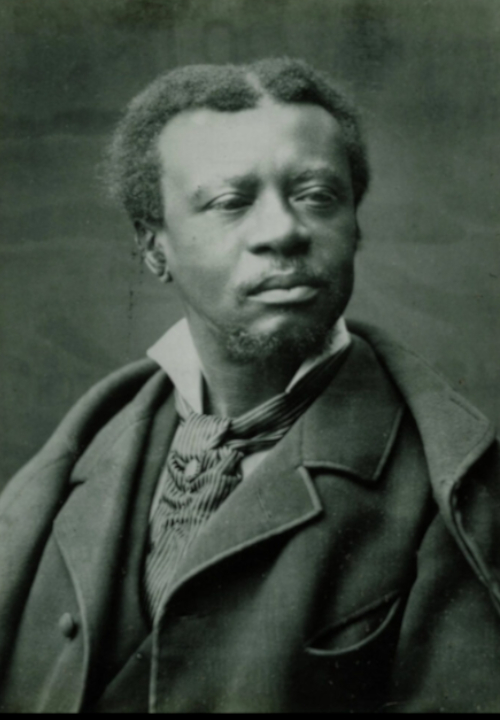
    Edmond Dédé: A Composer Between World

    Edmond Dédé was one of the most remarkable musicians to emerge from nineteenth century New Orleans, yet for more than a century his name was largely forgotten. A gifted violinist, conductor, and composer, he built a prolific musical career in France after racial barriers in the United States sharply limited his professional opportunities. Today, as his music returns to the stage and his long lost opera Morgiane finally receives its premiere, Dédé is increasingly recognized as one of the earliest major Black composers in American classical music.

    Early Life in a Unique Musical City

    Dédé was born in New Orleans on November 20, 1827, into the city’s vibrant Creole community of free people of color. This community occupied a distinctive place in the cultural life of antebellum Louisiana. Many were educated, multilingual, and deeply involved in the arts, particularly music. Yet despite their relative prosperity and cultural influence, they lived under the constant constraints of a racial hierarchy that sharply limited their opportunities.

    Music entered Dédé’s life early. His father, a poultry dealer who also served as a bandmaster for a local militia unit, gave the young boy his first lessons. Dédé initially studied the clarinet before turning to the violin, an instrument on which he quickly developed a reputation as a prodigy.

    Despite the racial restrictions of the time, he received an unusually rich musical education. In New Orleans he studied violin with Constantin Debergue, a respected free Black conductor, and with the Italian born composer Ludovico Gabici. He also studied harmony and counterpoint with the French Prix de Rome winner Eugene Prevost and with Charles Richard Lambert, a prominent Black musician originally from New York.

    These teachers placed Dédé within a sophisticated network of musicians who moved comfortably between European classical traditions and the lively musical culture of New Orleans.

    A Talent Forced Abroad

    Even with his prodigious skill, Dédé encountered a harsh reality. Free musicians of color were effectively excluded in practice from full time positions in New Orleans’ major theaters. For a young composer with professional ambitions, the city offered little chance for advancement.

    Like many artists in similar circumstances, Dédé began searching for opportunities elsewhere. In 1848 he briefly relocated to Mexico, seeking work as an instrumentalist before eventually returning to New Orleans.

    During this time he supported himself as a cigar maker while continuing to perform and compose. The work was demanding, but it allowed him to save enough money to pursue the dream that many ambitious musicians of the era shared: study in Europe.

    In 1852 he published the song Mon pauvre cœur, which is considered the oldest surviving piece of sheet music written by a New Orleans Creole of color.

    A few years later he finally made his move abroad. Because Louisiana law restricted the movements of free people of color, he is believed to have traveled under a Mexican passport stating he was born in Veracruz. This kind of evasive strategy was often necessary for Black Americans seeking artistic freedom in the nineteenth century.

    Studies in Paris

    Dédé arrived in Paris in the mid 1850s hoping to study at the prestigious Paris Conservatoire. Older accounts often claim that he was admitted to the institution, but more recent research suggests a different story.

    He was older than the age limit for many Conservatoire programs, so he instead audited classes and studied privately with several of its most distinguished faculty members, including the celebrated violinist Jean Delphin Alard and the composer Fromental Halévy.

    Like many young musicians in Paris, Dédé supported himself by performing while continuing his studies. The experience immersed him in the musical language of French grand opera and operetta, influences that would remain central to his own compositions.

    A Long Career in Bordeaux

    Around 1860 Dédé settled in Bordeaux, where he would spend most of the rest of his life. He began working as a répétiteur and assistant conductor for the ballet at the city’s Grand Théâtre.

    Although he later exaggerated this position when describing his career back home, the work placed him within one of France’s important regional opera houses.

    His true professional success came in the city’s popular entertainment venues. For decades he served as music director and conductor for major café concert theaters including the Alcazar and later the Folies Bordelaises. These establishments attracted large audiences eager for lively orchestral music, dance tunes, and theatrical spectacles.

    Dédé thrived in this environment. Over the course of his career he composed over 200 works including dances, songs, operettas, ballets, overtures, and chamber music. His music blended the elegance of French operatic style with the rhythmic vitality of Caribbean and New Orleans traditions.

    Even while living in France, his reputation reached across the Atlantic. In 1865 his Quasimodo Symphony was performed in New Orleans by an orchestra led by the Black conductor Samuel Snaër Jr., demonstrating that his music remained known in the city where he had grown up.

    A Composer with a Playful and Subversive Voice

    Dédé was not only prolific but also inventive.

    His surviving orchestral work Méphisto Masqué reveals a composer with a mischievous sense of humor. In one remarkable section he scored twelve parts for mirlitons, a type of kazoo like instrument popular in French musical comedy. The piece was dedicated to “bigotophonistes,” a pun that some modern conductors interpret as a sly jab at racial bigotry.

    He also delighted in unusual instrumental colors. In the same work he wrote a virtuoso passage for the ophicleide, a brass instrument that the composer Hector Berlioz had famously warned should never attempt such agile music.

    These touches suggest a composer who enjoyed bending the expectations of the musical establishment.

    Morgiane and a Radical Reimagining

    Dédé’s most ambitious work was his four act opera Morgiane, ou, Le Sultan d’Ispahan, completed in 1887.

    The opera draws loosely from the tale of Ali Baba and the Forty Thieves, but Dédé and his librettist transformed the story in an important way. In traditional versions Morgiane is an enslaved woman. In Dédé’s version she is a free woman and an equal partner who ultimately saves her family.

    For historians this change is more than a simple narrative tweak. Dédé grew up in New Orleans, which was the largest slave market in the United States. Some historians interpret this change as reflecting Dédé’s experience within the complex social world of Creole New Orleans.

    Although the opera was never staged during his lifetime, it stands today as the earliest known complete opera written by an African American composer.

    The Dramatic Homecoming

    After nearly four decades in Europe, Dédé returned to the United States in 1893.

    The journey itself became legendary. His ship encountered a violent storm and was forced to dock in Galveston, Texas, where he was stranded for weeks. Newspapers eagerly reported the fate of his prized violin, though accounts disagreed about whether it was saved or lost.

    When he finally reached New Orleans he was greeted with great enthusiasm. Audiences packed his concerts, eager to celebrate a musician who had achieved success abroad.

    At his farewell performance he surprised listeners by ending the program not with a virtuosic violin showpiece but with a banjo and guitar encore that turned the evening into something closer to a dance.

    Yet the trip was also sobering. The South he returned to was increasingly defined by Jim Crow laws and the failures of Reconstruction.

    Realizing that the country of his birth still offered little place for him, Dédé returned permanently to France the following year.

    Before leaving he performed a song titled La Patriotisme, whose lyrics lamented a homeland that refused his love.

    A Legacy Lost and Found Again

    Despite his long career and hundreds of compositions, Dédé’s music gradually faded from memory after his death in 1901. Shifting musical tastes and the historical marginalization of Black composers meant that his name disappeared from many standard music histories.

    He was buried in Paris, and the precise location of his grave is uncertain.

    The rediscovery of his music began only in the late twentieth century when conductor Richard Rosenberg located and reconstructed several of his orchestral scores in Paris.

    An even more dramatic discovery followed when the manuscript of Morgiane was found among a collection of music at Harvard University.

    In 2025, 138 years after it was written, the opera finally received its world premiere in performances in New Orleans, Washington D.C., and New York.

    The New Orleans staging carried particular symbolism. The performance took place in St. Louis Cathedral, the same building where Dédé had been baptized as an infant nearly two centuries earlier.

    Reclaiming a Forgotten Pioneer

    Today Edmond Dédé is increasingly recognized as a foundational figure in American classical music. His life reveals a musical world far richer than the traditional narratives of nineteenth century American music often suggest.

    Long before jazz transformed New Orleans into a global musical capital, Black musicians in the city were already composing operas, symphonies, and chamber music rooted in European traditions while drawing on the cultural influences of the Caribbean and the Americas.

    Dédé’s rediscovered works remind us that this tradition was never absent. It was simply overlooked.

    As performers and scholars continue to revive his music, Edmond Dédé is finally returning to the story of American music where he has always belonged.


    Sources and Further Reading

    Bailey, Candace. Program Notes for Morgiane. In Homecoming: Edmond Dédé’s Morgiane. The Historic New Orleans Collection, 2025.

    Bishop, Victoria. Edmund Dédé (1827–1903). BlackPast.org, 2013.

    Buzard, Katie. Edmond Dédé: An American in Paris. Illinois Public Media, 2023.

    Edmond Dédé. Wikipedia.

    Hanson, Christopher T. F. A Survey of Sources Related to Edmond Dédé: Nineteenth-Century New Orleans Violinist, Composer and Conductor. Thesis, 2009.

    Hanson, Christopher T. F. An Analytical View of Edmond Dédé’s Méphisto Masqué: Polka Fantastique. Thesis, 2011.

    Joseph, Givonna. Reflections on Morgiane. In Homecoming: Edmond Dédé’s Morgiane. The Historic New Orleans Collection, 2025.

    McCoy, Patrick D. Edmond Dédé, America’s First Black Opera Composer. Early Music America, 2025.

    McKee, Sally. Edmond Dédé: A Brief Biography. In Homecoming: Edmond Dédé’s Morgiane. The Historic New Orleans Collection, 2025.

    Naxos Records. Biographical Overview of Edmond Dédé.

    Sammut, Andrew J. Edmond Dédé’s Morgiane: A Hit Opera, 138 Years Late. Early Music America, 2026.

    Sullivan, Lester. Composers of Color of Nineteenth-Century New Orleans: The History Behind the Music. Black Music Research Journal, 1988.

    Yohannes. Edmond Dédé – The Classical Composer No One Talks Of. YouTube transcript.

  • Agathe Backer Grøndahl: Norway’s Unsung Romantic Virtuoso

    Agathe Backer Grøndahl: Norway’s Unsung Romantic Virtuoso

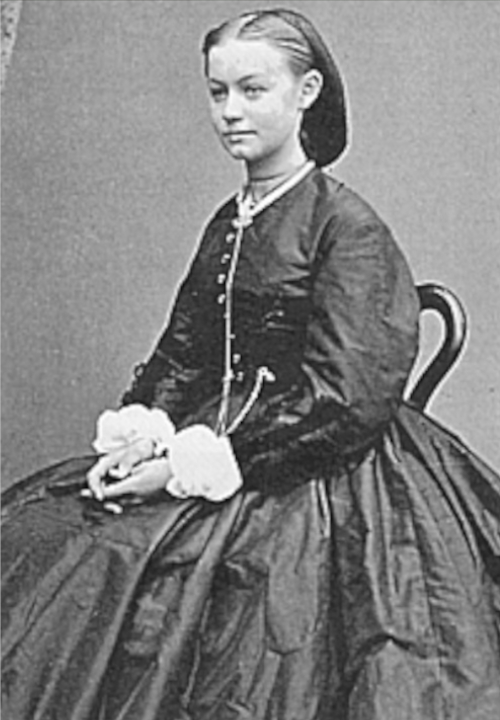
    In the late 19th century, Norway’s musical scene was bursting with talent. Names like Edvard Grieg and Johan Svendsen became symbols of national pride, but another figure stood alongside them who is only now beginning to receive her due: Agathe Backer Grondahl.

    Pianist, composer, and one of the most remarkable musical personalities of her time, she combined international virtuosity with a gift for lyrical, poetic expression. Though her contemporaries hailed her as one of the century’s great pianists and praised the beauty of her songs and piano works, her legacy was long overshadowed by her gender, by her chosen genres, and by the towering reputation of Grieg. Today, however, her music is being rediscovered, revealing a fascinating historical figure with a body of work that feels fresh, moving, and modern in its own right.

    Early Life and Artistic Development

    Agathe Ursula Backer was born on December 1, 1847, in the Norwegian coastal town of Holmestrand, south of Oslo. She grew up in a cultured, comfortable household where music and art were a part of daily life. Agathe was one of four sisters, all of whom were artistically gifted; her sister Harriet went on to become one of Norway’s most celebrated painters. For Agathe, however, the piano is where her talent lay from earliest childhood, as family members recalled her inventing melodies almost as soon as she could reach the keys. Harriet called her a true Wunderkind, a child prodigy who seemed destined for music from the start.

    When the family moved to Christiania (now Oslo) in 1857, ten-year-old Agathe began formal studies with leading Norwegian musicians, including Otto Winther-Hjelm, Ludvig Mathias Lindeman, and the composer Halfdan Kjerulf. Kjerulf quickly recognized her extraordinary gift but also reflected the attitudes of his time. He warned that the stage was no place for a respectable young woman and urged her to treat art as a private “ornament” rather than a public career. Agathe firmly disagreed. “There is something in me that will never give me peace,” she wrote in reply, declaring that her love for art left her no choice but to follow it seriously.

    Her determination carried her abroad. In 1865, at just seventeen, she left for Berlin with her sister Harriet to pursue study: piano with Theodor Kullak, composition with Richard Wuerst, and later lessons with Hans von Bülow in Florence and Franz Liszt in Weimar. By the time she returned to Norway in 1868, she had the training of Europe’s finest masters, and her debut with Beethoven’s Emperor Concerto under the baton of her friend Edvard Grieg confirmed her as a serious artist at only twenty years old.

    Formative Musical Training

    Her years of study in Berlin, Florence, and Weimar left lasting fingerprints on her music. Kullak gave her technical discipline, von Bülow sharpened her interpretive focus, and Liszt inspired the bravura and chromatic daring that appear in her concert studies.

    One of the most obvious influences from her Berlin years is the German Romantic song tradition, especially the models of Felix Mendelssohn and Robert Schumann. Her early songs show a careful attention to text, graceful melodic writing, and strong formal control — qualities that critics like George Bernard Shaw would later single out as central to her style. Her debut publication, 3 Songs, Op. 1, included the romance To the Queen of my Heart, which became especially popular. The piece reveals not only her gift for melody but also her skill in giving the piano part a richness that supports and deepens the vocal line, very much in the vein of the Lied tradition she absorbed in Berlin.

    While Backer Grøndahl eventually became best known for her smaller-scale works, her student years also showed an interest in larger forms. She composed two orchestral works while in Berlin, an Andante quasi allegretto for piano and orchestra and a Scherzo for winds and horns, both of which were well received and demonstrated a confident grasp of orchestral writing. Around the same time, she won acclaim for her performances of major repertoire such as Beethoven’s Emperor Concerto, a piece that demanded the kind of technical and artistic maturity she was rapidly developing under Kullak’s guidance.

    Her training with both Kullak and von Bülow, and later Liszt, also laid the groundwork for the more technically demanding side of her piano music.[1] Kullak was known for his rigorous teaching, and Backer Grøndahl’s time with him gave her the solid technique and brilliance that critics praised throughout her career. Her later lessons with von Bülow refined her abilities further and prepared her for Liszt’s masterclasses in 1873. The virtuosic concert études she would go on to compose — works like Op. 11, Op. 47, and Op. 57 — reflect this elite training.[2] They demand strength, precision, and imagination, putting her firmly in the same lineage as Chopin and Liszt.

    Personal Life and Career

    In 1874 Agathe married Olaus Andreas Grøndahl, a conductor who was one of the driving forces in Norway’s choral movement, and soon the name Agathe Backer Grøndahl appeared on concert programs across Europe. The couple had three sons and suffered the loss of a daughter shortly after birth. One son, Fridtjof, carried Agathe’s legacy forward as a pianist and composer devoted to preserving and promoting his mother’s works.

    Although she was offered a prestigious teaching position at the Peabody Conservatory of Music in Baltimore in 1875, Agathe declined, choosing to remain in Norway with her family. Even with these limits, she built a thriving career. During the late 1870s and 1880s she toured widely across Scandinavia and performed in London and Paris, earning international acclaim. At home she became known as the consummate multitasker: wife, mother, pianist, teacher, and composer. She often portrayed herself as a woman who composed only after the day’s domestic duties were finished, a strategic image that allowed her greater freedom to perform and publish while still sitting within the conventions of respectable womanhood in her era.

    Backer Grøndahl was a perfectionist, modest in public but plagued by severe stage fright. Her son later admitted that every concert was “a great suffering, almost a trial” for her. From her thirties onward she also battled serious health issues, including hearing loss that left her almost completely deaf by the 1890s. Even so, she achieved a late triumph when Grieg persuaded her to perform his concerto at the Bergen Music Festival in 1898. She continued to give concerts until 1901, when she retired from the stage to devote herself to teaching.

    Despite her successes, Agathe sometimes looked back with regret. In letters she described her life as “narrow” and her accomplishments as “small things all together,” wishing she had been able to attempt larger forms. She died in June 1907 at her home outside Christiania, only a few months before Edvard Grieg. Grieg, deeply moved, wrote in his diary: “If a mimosa could sing, harmonies would emerge from it as from Agathe Backer Grøndahl’s most beautiful, most intimate performances.”

    Agathe’s career unfolded alongside some of Norway’s most famous musicians, none more so than her friend Edvard Grieg. The two were often compared, sometimes as equals, sometimes in contrast, and these comparisons reveal much about Backer Grøndahl’s distinctive voice.

    Comparisons to Edvard Grieg

    Agathe Backer Grøndahl’s piano writing is often discussed alongside, and sometimes in contrast to, that of Edvard Grieg. Together with Grieg and Halfdan Kjerulf, she is recognized as one of the most significant Norwegian composers of the nineteenth century. Though she and Grieg were close friends who dedicated some of their musical works to one another, their compositional approaches reveal notable differences.

    Grieg’s piano music often stayed in familiar territory, both in style and in the comfortable middle range of the keyboard. Backer Grøndahl, on the other hand, wasn’t afraid to stretch the instrument to its limits, reaching for the very lowest notes for depth and power and the highest ones for sparkle and intensity. Her pieces were known for being tightly constructed and full of momentum, more like short stories than sprawling novels. In some ways her style even hinted at the dreamy, colorful sounds that would become popular in early 20th-century impressionism. While Grieg’s music carried a strong sense of Norway’s national identity, Backer Grøndahl’s voice often felt more European in flavor, connected to a wider circle of influences.

    Both composers excelled in the miniature form – short, self-contained piano pieces that capture a single mode, image, or idea rather than unfolding like a long sonata. Grieg’s Lyric Pieces are often cited as models of the genre, but Backer Grøndahl specialized in character pieces that capture fleeting moods with refinement and precision. Her Fantasy Pieces, Op. 39, for example, recall the elegant, song-like piano works of Schumann and Mendelssohn while also revealing her own distinctive poetic voice. She also contributed substantially to the development of Norwegian national music, arranging folk songs and dances in ways that contrasted with Grieg’s more familiar approach; her settings often kept closer to the raw, unpolished character of the tunes, while Grieg tended to smooth them into a more classical, concert-ready style. Backer Grøndahl’s connection with Halfdan Kjerulf, under whom she studied composition in Christiania, further shaped her orientation toward song and piano music rather than large-scale symphonic works. Like Kjerulf and Grieg, she concentrated her creative energies on genres that suited her lyrical and intimate sensibilities. In this realm, she was regarded as Kjerulf’s equal, and in many respects his successor.

    Her distinctive style was also shaped by her career as an internationally renowned virtuoso pianist. Having studied with Franz Liszt, she absorbed the flashy, high-energy style of Romantic piano techniques and often wrote with what contemporaries described as “masculine power and intensity.” Substantial works such as In the Blue Mountain, Op. 44, and her concert studies show her firmly within the Chopin–Liszt tradition, exploring every corner of the instrument’s possibilities. Her Op. 35 pieces, with their adventurous chromatic harmonies, reveal Lisztian influence in particular.

    Throughout her career, Backer Grøndahl drew on the piano traditions of mid-nineteenth-century Europe but also found ways to move beyond them. In pieces like Sérénade, Op. 15 No. 1, she blended older classical techniques of harmony and voice-leading with the richer, more expressive language of the Romantic era. Her later works use adventurous chromatic harmonies and subtle chord progressions that look ahead to early modern styles. Whether in large-scale concert pieces or intimate miniatures, her music was admired for its charm, delicacy, and brilliance. Above all, it carried lyrical beauty and poetic depth, leaving listeners with a vivid and lasting impression. But comparing her music to Grieg’s only tells part of the story. To really understand Backer Grøndahl’s place in her time, we have to look at how critics described her, and here the contrast between her reception as a pianist and as a composer is especially revealing. On stage she was celebrated for strength, authority, and brilliance, but when it came to her compositions, those same critics often fell back on gendered language, praising them as “delicate” or “feminine” no matter their originality or depth.

    Critical Reception and Gendered Expectations

    The way Agathe Backer Grøndahl was described in her own time depended greatly on whether she was being praised as a pianist or as a composer. As a performer she was celebrated for her power, authority, and brilliance. George Bernard Shaw went so far as to call her “one of the century’s greatest piano artists,” noting her command of Beethoven, Schumann, and Chopin. Critics marveled at her “rare brilliancy of style” and the way she combined “a woman’s grace and a man’s energy.” From her very first triumph in Christiania playing Beethoven’s Emperor Concerto, reviewers emphasized her strength and self-possession at the keyboard.

    As a composer, however, the language often shifted. Her output was substantial, including around 400 works over seventy opus numbers, but even so, critics tended to highlight qualities like charm, delicacy, and lyricism. Her songs, particularly To the Queen of my Heart, were praised for their melodious beauty and sensitivity, but her reputation was largely confined to smaller forms such as songs and piano pieces. These genres were already considered “appropriate” for women, which reinforced the idea that her artistry belonged in the intimate, domestic sphere rather than on the grand stage of symphonies and concertos. Even when Shaw praised her “Mendelssohnic sense of form,” he still placed her work in contrast to Grieg’s, sometimes with a faint note of condescension.

    This double standard reflects the gendered stereotypes of the nineteenth century. Women were expected to excel in miniature forms that expressed intimacy and refinement, while large-scale works were reserved for men. Critics sometimes dismissed her piano works as “salon music,” a label often applied to compositions considered too light or domestic to be serious art. At the same time, her own public statements, which tended to frame her composing as something she did “in the quiet of the evening” after tending to household duties, helped her maintain respectability in bourgeois society, even as she pursued an international career.

    Abroad, especially in London and Paris, she was taken far more seriously as a pianist of international stature. Shaw lauded her as an interpreter on par with the greates of her era, and one critic at the Paris World Exhibition called her “a queen of her instrument.” In these settings, her reputation leaned heavily on her virtuosic power and professional authority. At home in Norway and across Scandinavia, she was equally respected but in a different light. Norwegian critics emphasized her role in the national music scene, praising her lyrical songs and her close relationship with domestic audiences. Still, the tendency to frame her compositional legacy around “the lesser forms” reflected the cultural constraints placed on women.

    In short, Backer Grøndahl was celebrated internationally for her technical mastery as a pianist, while her achievements as a composer were often filtered through expectations of delicacy, intimacy, and domesticity. This split reveals not only the biases of her time but also the resilience with which she navigated them, managing to be both a world-class virtuoso and one of Norway’s most important composers.

    Agathe Backer Grøndahl and Norwegian National Music

    Even while critics tried to box her into ideas of delicacy or domesticity, her music spoke to something larger: the cultural spirit of Norway itself. In her songs, dances, and piano works, she helped give sound to a nation searching for its musical identity.

    Agathe Backer Grøndahl played a central role in what has been called the golden age of Norwegian music. Alongside Edvard Grieg and Johan Svendsen, she stood at the forefront of shaping a national musical identity during a period when Norway was still seeking cultural independence. As both a composer and a pianist, she was regarded as one of the leaders of modern Norwegian music, ranked “in the first rank” of composers alongside Grieg and Halfdan Kjerulf.

    Her contribution to this national project is especially clear in her treatment of folk material. She not only composed her own folk-inspired works but also actively collected traditional tunes directly from local musicians. She arranged these songs and dances into published sets such as Norske folkeviser og folkedanse, Opp. 30 and 33, and Norske folkeviser, Op. 34. The influence of the Hardanger fiddle, a traditional Norwegian instrument, can also be heard in her piano writing, especially in her Norwegian dances. Pieces like Huldreslaat (Wood Nymph’s Dance) and the suite In the Blue Mountain (Fairytale Suite) reflect her interest in folklore and the landscapes of her homeland.

    At the same time, critics noted differences between her handling of folk material and Grieg’s. While both composers channeled Norwegian folklore and natural imagery, Backer Grøndahl’s arrangements often kept closer to the rough edges of the source material, where Grieg tended to smooth them into more polished, classical settings. Her music could certainly evoke Norwegian moods with warmth and charm, but it also carried a cosmopolitan quality that made it sound “more European” than Grieg’s.

    This stylistic divergence became more apparent later in her career. Grieg remained the figure most closely associated with musical nationalism, working in forms that highlighted a distinctly Norwegian character. Backer Grøndahl, by contrast, often preferred concise, tightly constructed pieces that hinted at new directions. Her writing explored the extremes of the piano’s range and used chromatic harmonies reminiscent of Liszt. These elements gave her music a different flavor, and some commentators have suggested that she anticipated impressionism, leading Pauline Hall to call her the first true Norwegian impressionist.

    Her performances also gave Norwegian music a powerful voice abroad. George Bernard Shaw famously called her “one of the century’s greatest piano artists,” and her success lent credibility to the idea of a professional musical culture in Norway. Perhaps her most important role was as the great interpreter of Grieg’s Piano Concerto in A minor. She performed it at her Christiania debut in 1868 under Grieg’s direction and championed it throughout her career, from London and Paris to the first Bergen music festival in 1898. Critics felt she embodied the concertoʻs spirit, and even when illness threatened her career, Grieg relied on her to carry it forward, a sign of both artistic partnership and personal loyalty.

    Through these dual roles, as a composer who enriched Norwayʻs song and piano traditions, and as a pianist who brought national music to international stages, Backer Grøndahl shaped Norwegian musical identity in ways that both complemented and expanded the work of her male colleagues. Her legacy demonstrates how Norwayʻs cultural voice was not only definted by its most famous men but also carried forward, and soemtimes even broadened, by the artistry of one remarkable woman.

    Technically Demanding Works

    Some of Agathe Backer Grøndahl’s most challenging piano works were written squarely in the tradition of her famous teacher, Franz Liszt. These were not polite parlor pieces for an evening’s entertainment; they were full-scale concert showpieces that demanded stamina and virtuosity. Her six-movement suite In the Blue Mountain (Fairytale Suite), Op. 44, is a prime example . It is expansive, brilliant, and composed in the dazzling, theatrical style Liszt championed and sits at the upper end of what even seasoned pianists can comfortably attempt.

    She also produced roughly twenty concert études (“studies”), including her 6 Concert-Étuder, Op. 11, and Études de concert, Opp. 47 and 57. Like the études of Chopin and Liszt, these works combine technical drills with genuine artistry. Contemporary critics sometimes struggled to describe her forceful style, falling back on phrases like “masculine power and intensity” — a telling acknowledgment that she was pushing against the gendered expectations of her time. Even pieces occasionally brushed off as “salon music,” such as the 3 Klaverstykker, Op. 35, reveal hidden challenges. Modern pianists note that the final movement, reminiscent of a Schubert impromptu, is deceptively demanding: one performer quipped that it’s “a real beast to play.”

    Her reputation as a virtuoso pianist gave her instant authority on stage. Reviews in London and Birmingham during the 1880s praised not only her technical brilliance but also the poetry and authority of her interpretations. George Bernard Shaw, rarely generous with praise, ranked her among the century’s finest pianists, lauding her mastery of Beethoven, Schumann, and Chopin. He also admired the balance and elegance of her compositions, comparing her sense of form to Mendelssohn’s. Today, large-scale works like In the Blue Mountain are being rediscovered, though their sheer difficulty still keeps them rare in concert programs. Scholars and performers hope more pianists will champion them, since they showcase an expansive, electrifying side of her artistry. Modern commentators describe her music as passionate, colorful, and noble, often noting how her late works foreshadow impressionism. While her songs and shorter character pieces remain the most accessible entry points for audiences, her reputation as a composer of real depth and brilliance is steadily being restored.

    Why She was Overlooked

    For much of the twentieth century, Agathe Backer Grøndahl slipped out of sight in mainstream histories of Romantic music. Scholars today point to several overlapping reasons, most of which had little to do with the quality of her work and much to do with gender, genre, and the shadow cast by her more famous colleague Edvard Grieg.

    The first and most persistent factor was gender. Like many women of her time, Backer Grøndahl worked primarily in songs and piano pieces — genres critics routinely dismissed as “lesser forms” compared to the symphonies and concertos that defined the musical canon. Even though she excelled in these formats, her confinement to them reinforced the stereotype that “women and the lesser forms go together.” Adding to this, she publicly cultivated an image of herself as a wife and mother who composed only in the evenings, after her domestic duties were finished. This persona gave her freedom to continue her career within bourgeois expectations, but it also left posterity with the impression that her music was more of a “delectable ornament” than the serious work of a professional composer. Later in life she admitted her frustration with these constraints, confessing that she felt her accomplishments were “small things all together” and that she had lived in a “narrow, underdeveloped condition.”

    A second factor was her association with Edvard Grieg. The two were close friends, and she was one of the great interpreters of his Piano Concerto. But Grieg’s fame became so overwhelming that many other Norwegian composers, including Backer Grøndahl, were relegated to the margins of music history, often mentioned only “in Grieg’s shadow.” Her style also diverged from his: while Grieg’s music came to epitomize Norwegian national Romanticism, hers often sounded more cosmopolitan and, in her later years, anticipated impressionism. This made her harder to slot neatly into the narrative of a purely national school. Finally, there is the simple matter of neglect. For decades, her music was largely ignored outside Scandinavia. She was remembered mostly as a pianist, or perhaps as the composer of a few light salon pieces, rather than as the author of a substantial body of work. Only recently have scholars and performers begun to challenge this image. New urtext editions of her piano works, modern recordings, and renewed critical attention all point to the same conclusion: her music was not forgotten because of any flaw in quality. On the contrary, it is being recognized today as “truly works of the highest order, wonderfully evocative and consummately crafted.”

    For much of the twentieth century her work was pushed aside or forgotten. In the last few decades, however, scholars and performers have worked to change that, bringing her music gradually back into view.

    Rediscovery in the 21st Century

    In recent years, Agathe Backer Grøndahl’s music has been undergoing a steady revival. For a long time she was remembered mainly as a brilliant pianist, or as the composer of “a few light pieces.” Today, however, both scholars and performers are reassessing her true stature, recognizing her as one of Norway’s great composers.

    On the academic side, researchers have been digging into her letters, notebooks, and reception history to understand how her work was shaped by ideas of femininity, genre, and Norwegian identity. Camilla Hambro’s 2008 dissertation was especially influential in setting the stage for this re-evaluation. Scholars now emphasize not only her lyricism but also her forward-looking qualities, noting that her later style anticipated impressionism — an observation underscored by Pauline Hall’s remark that she was the first true Norwegian impressionist. The release of urtext editions of her piano works through Edition Peters has been another milestone, making reliable scores available for the first time and encouraging new performances.

    Performers are also playing a key role in this rediscovery. Pianists like Sara Aimée Smiseth have championed her music in recordings and concerts, pointing out that what was once dismissed as small or decorative pieces actually reveals poetic depth, technical brilliance, and a fresh, modern sensibility. Thanks to online resources like IMSLP, much of her music is now easily accessible to pianists everywhere, helping to bring her works back into circulation. Several pieces in particular have emerged as favorites in the revival. Her Sérénade, Op. 15 No. 1, remains one of her most beloved works, admired for its lyrical charm and the subtle craftsmanship beneath its surface. The Fantasy Pieces, Op. 39, are another highlight: short, beautifully formed character pieces that appeal to both audiences and performers. They are accessible to skilled amateur pianists while still sophisticated enough to intrigue professionals, with compressed structures and coloristic writing that foreshadow impressionism.

    At the other end of the spectrum, her large-scale In the Blue Mountain (Fairytale Suite), Op. 44, is attracting attention for its dazzling difficulty and Lisztian theatricality.[2] Though demanding for even seasoned pianists, it offers a thrilling blend of folklore, passion, and virtuosity. Works once brushed aside as “salon music,” like the 3 Klaverstykker, Op. 35, are also being re-examined, with modern listeners noting the chromatic richness and technical bite hiding under their modest labels.

    Her songs, too, are enjoying renewed appreciation. To the Queen of my Heart, Op. 1 No. 3, remains a staple, while Mot kveld (Eventide), Op. 42 No. 7, is recognized today as one of her deepest and most moving contributions to the romance genre. These works appeal to modern audiences for their direct emotional expressiveness, their graceful melodies, and their ability to capture the unspoken longings of Romantic sensibility.

    This renewed attention shows that her music was never lacking in quality — only in opportunity. As her works return to the stage and the classroom, her place in music history is finally being restored.

    Conclusion

    Agathe Backer Grøndahl’s story is both inspiring and bittersweet. She forged a career in an era that doubted women’s ability to compose “serious” music, earning acclaim as an international virtuoso while leaving behind hundreds of songs and piano pieces that shimmer with color and poetry. Yet she also felt the weight of expectation, lamenting late in life that her accomplishments were “small things all together.”

    Modern scholarship and performance are proving otherwise. From the intimate beauty of her romances to the dazzling virtuosity of In the Blue Mountain, her works reveal a range and brilliance that deserve a central place in the Romantic canon. To hear her today is to rediscover a long-overlooked voice of Norway’s golden age — and to encounter music that still speaks vividly to modern audiences.


    Sources and Further Reading

    Alver, Rune. Liner notes and essays for recordings of works by Agathe Backer Grøndahl.

    Dahm, Cecilie. Agathe Backer Grøndahl. Oslo: Aschehoug, 1998.

    Dybsand, Anniken. Komponist og pianist i romantikkens Norge. Master’s thesis, University of Oslo, 2010.

    Grove Music Online. “Backer Grøndahl, Agathe.” Oxford University Press. https://www.oxfordmusiconline.com/

    Hall, Pauline. Comments on Agathe Backer Grøndahl’s impressionistic style (often cited as calling her the first true Norwegian impressionist).

    Hambro, Camilla. Gender, Genre, and Norwegianness: Studies in the Music of Agathe Backer Grøndahl. PhD dissertation, University of Oslo, 2008.

    Herresthal, Harald. Agathe Backer Grøndahl: Pianist og komponist i romantikkens Norge. Oslo: Norsk Musikforlag, 2003.

    Krohn, Nina. Lyden av det tapte: En reise gjennom Agathe Backer Grøndahls liv og musikk. Oslo: NRK/Spartacus, 2013.

    Røttingen, Einar. Liner notes and essays for recordings of Agathe Backer Grøndahl’s piano works.

    Shaw, George Bernard. Critical reviews of Agathe Backer Grøndahl’s performances (London and Birmingham, 1880s).

    Smiseth, Sara Aimée. “Agathe Backer Grøndahl.” In Store norske leksikon. https://snl.no/Agathe_Backer_Grøndahl

    Tomescu-Rohde, Monica. Liner notes and commentary for recordings of Backer Grøndahl’s works.

  • Dora Pejačević: Croatia’s Aristocratic Modernist Composer

    Dora Pejačević: Croatia’s Aristocratic Modernist Composer

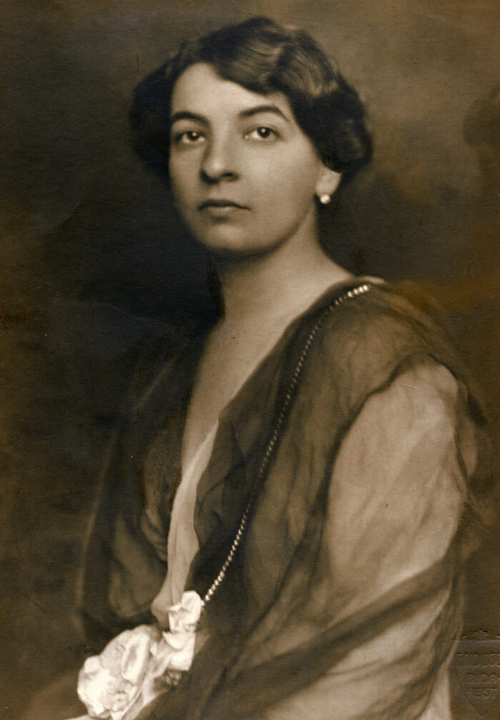
    Born in 1885 in Budapest to a Croatian count and a Hungarian pianist-baroness, Dora grew up in Našice Castle, surrounded by the trappings of nobility: crystal chandeliers, English governesses, and an education that could have produced a perfectly respectable socialite. But Dora had other plans. Rather than becoming the well-mannered aristocrat everyone assumed she’d be, she quietly dismantled the rules of her class through her choices: in music, in life, and ultimately, in death.

    She began composing at age 12. By 28, she was the first Croatian composer to write a piano concerto. Though she studied across Europe, she remained largely self-taught, relentlessly driven, full of yearning, and increasingly skeptical of a world that measured people by lineage rather than contribution.

    Her early pieces lived in the cozy world of Romanticism, with hints of Chopin and the dazzle of salon music, but beneath the elegance, something restless stirred.

    World War I changed everything.

    While many of her fellow aristocrats remained sheltered from the conflict, Dora volunteered as a paramedic on the Eastern Front, bandaging wounds, comforting the dying, and absorbing horrors no training could prepare her for. The experience transformed her. Her music, once lush and Romantic, grew darker, heavier, more introspective.

    The war stripped away any remaining illusions she had about aristocracy, privilege, or the usefulness of beauty for beauty’s sake. What remained was clarity. Grief. And music that no longer asked to impress but to speak.

    In the years that followed, Dora composed with sharpened purpose. Between 1913 and 1918, a time of global chaos and personal reckoning, she created some of her most profound and technically daring works.

    Her Piano Concerto in G minor, the first ever composed by a Croatian, set the stage. But it was her Symphony in F-sharp minor, completed during the war and later premiered in Dresden, that cemented her as a force of modern Croatian music. Dark, unflinching, and emotionally vast, the symphony pulsed with grief and insight.

    Her chamber works from this period, like the Piano Quintet in B minor, the Slavonic Violin Sonata, and the Trio in C major, were equally bold, filled with emotional depth and structural precision. And she wasn’t just impressing concert audiences: her setting of Karl Kraus’s poem Verwandlung caught the attention of the poet himself, who shared it with popular composer Arnold Schönberg.

    Schönberg praised the piece and suggested it deserved a public performance in Vienna, though he also reportedly expressed surprise that a woman had composed it. Dora’s talent spoke louder than prejudice, but it wasn’t immune to it.

    She died of complications from childbirth at just 37 years old, shortly after the birth of her son, Theo. She was living in Munich at the time, far from her beloved Našice. Even in death, she thought of others, requesting that donations be made to musicians in need. And she took authorship of her farewell as she had her life: quietly, deliberately, and on her own terms.

    Her epitaph, which she composed herself, reads only: “Dora. Rest now.”

    And yet her music lingers. It doesn’t rest. It stirs.

    Maybe it’s time we let it stir something in us, too. Dora Pejačević had wealth, talent, and every excuse to look away, but she didn’t. She chose to serve. She chose to listen. In an age of billionaires playing demagogue from gilded platforms and power-hungry autocrats dehumanizing everyone who isn’t considered in their “league,” her legacy reminds us that true nobility isn’t inherited; it’s chosen.

    We could use a little more of that today, more people of any class who are willing to stand up, speak out, and care.

    Dora’s story gives us a lot to sit with: art, war, class conflict, unexpected nobility, and maybe even a small existential spiral or two. But after a long reckoning, what do we humans tend to reach for?

    Something warm. Something shared. Something made with time and intention.

    Below you’ll find three Croatian dishes that, in their own ways, reflect the worlds Dora Pejačević moved between: the rustic and the refined, the communal and the quietly radical. They won’t solve the problems of the world, but they might just feed the part of us that’s still willing to try.


    Check out some foods from Dora’s home country on EatsyGeeksy!

  • Sergei Rachmaninoff: Cathedrals of Sound

    Sergei Rachmaninoff: Cathedrals of Sound

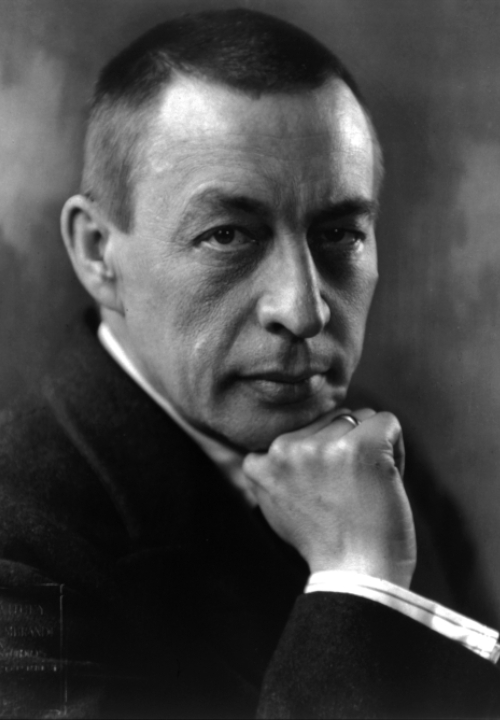
    Called the “last Romantic,” he was less a relic than a living monument: a virtuoso whose music dared to be unapologetically emotional in a century that increasingly distrusted feeling. His works rise like cathedrals of sound, built on thunderous bass foundations and crowned with soaring melodic spires; they showcased the power of beauty at a time when much of the musical world was abandoning it.major phases and shifts of life and career.

    Early Life, Training, and Breakthrough (1873-1897)

    Rachmaninoff was born in 1873 near Novgorod, Russia into a family that once had wealth and land but was rapidly losing both. If you picture young Sergei at a piano surrounded by strict teachers, you’re not far off. His early years at the St. Petersburg Conservatory (1882-1885) didn’t exactly shine; he excelled in music but floundered in general academics, which wasn’t unusual for a kid who lived and breathed the keyboard.

    The real turning point came when his cousin, Alexander Siloti, who was a student of Franz Liszt, pulled him over to the Moscow Conservatory. There, Rachmaninoff came under the stern but effective mentorship of Nikolai Zverev, a man who enforced discipline with military precision. While Rachmaninoff may not have loved the rigid schedule, it forced him into a seriousness about his craft that became the foundation of his later artistry. He also learned from big names like Sergei Taneyev and Anton Arensky, who nudged him toward composition.

    By the time he graduated in 1892, he didn’t just walk away with a diploma; he earned the Conservatory’s coveted Gold Medal. Not bad for a student once written off as distracted and uneven. That same year, he wrote a little something you’ve probably heard of: the Prelude in C# minor (Op. 3, No.2). When he debuted it in 1893, the piece became an instant sensation. Audiences adored it, and for the rest of his life they begged him to play it over and over, much to his eventual frustration. Imagine writing dozens of symphonies, concertos, and choral works, only to have people should, “Play the Prelude!” like it was a rock concert encore.

    With the world suddenly paying attention, Rachmaninoff decided to devote himself to a full-time career as a composer, but it got off to a tragic start. His Symphony No. 1 premiered in 1897 to devastatingly bad reviews. The backlash was brutal, and it didn’t just wound his pride; it stopped him in his tracks, throwing him into a creative silence that threatened to undo everything he had worked for.

    If there were a conservatory in Hell, and if one of its talented students were to compose a programme symphony based on the story of the Ten Plagues of Egypt, and if he were to compose a symphony like Mr. Rachmaninoff’s, then he would have fulfilled his task brilliantly and would delight the inhabitants of Hell. To us this music leaves an evil impression with its broken rhythms, obscurity and vagueness of form, meaningless repetition of the same short tricks, the nasal sound of the orchestra, the strained crash of the brass, and above all its sickly perverse harmonization and quasi-melodic outlines, the complete absence of simplicity and naturalness, the complete absence of themes.

    — César Cui, review of Rachmaninoff’s First Symphony

    Recover and Creativity Maturity in Russia

    After the crushing disaster of his First Symphony, Rachmaninoff’s life could have easily gone down a very different road. For three years he barely wrote a note, paralyzed by self-doubt and depression. It was the first major fracture in a career that, for all its brilliance, would be marked by cycles of triumph and despair.

    What turned things around wasn’t more practice or a change of scenery, however; it was, surprisingly, hypnotherapy. Under the guidance of Dr. Nikolai Dahl, Rachmaninoff underwent daily sessions that helped restore his confidence and sense of purpose. Out of that healing came one of the most enduring works in the piano repertoire: the Piano Concerto No. 2 in C minor (1901). It was both a personal redemption and a huge success, instantly recognized for its sweeping melodies and emotional depth.

    From that point on, his style began to mature into something distinctly his own. Musicologists like to describe it in complicated terms  like “functional tonal structures,” “equal-interval chromaticism,” and “modal frameworks,” but at the heart of it, Rachmaninoff had figured out how to combine old and new in a way that sounded organic and felt timeless… as if the music had always existed. He drew on the familiar language of Western harmony (the kind you’d recognize from Beethoven or Chopin), then twisted it with unusual interval patterns and modes that gave his music a darker, more Russian color. The result was music that felt grounded but also restless, brooding, and entirely original.

    One of his quirks as a composer was an obsession with the Dies Irae, a medieval chant about judgment and death. Once you start listening for it, you’ll hear it everywhere in his works, sometimes quoted directly, sometimes lurking in disguise. It first appeared in his ill-fated First Symphony, but he returned to it again and again, in The Isle of the Dead (Op. 29, 1909), in his later preludes, and in countless other places. It became his personal musical fingerprint, a reminder that even at his most romantic and lush, Rachmaninoff’s imagination was haunted by mortality.

    Meanwhile, practical life forced another important change. The financial fallout from his First Symphony meant he couldn’t rely on composing alone. To support himself, he began developing a serious career as a concert pianist. At first he performed music by others, most notably Tchaikovsky’s popular B♭ minor Piano Concerto, which he played to great acclaim starting in 1911. Over time, though, audiences discovered that what they really wanted was Rachmaninoff playing Rachmaninoff, and his dual identity as both composer and virtuoso pianist was cemented at last.

    By the eve of the Russian Revolution in 1917, Rachmaninoff had become one of the towering musical figures of his generation: a composer with a distinct voice, a pianist with unmatched power and nuance, and an artist who had learned, through crisis, recovery, and relentless discipline, how to turn personal struggle into lasting art.

    Exile and Reorientation as a Virtuoso (1917-1943)

    When the world turned upside down in 1917, so did Rachmaninoff’s life. The Russian Revolution stripped him of nearly everything: his home, his estate, his income, his sense of belonging. He left Russia with little more than a few scores and the clothes he could carry, stepping onto a westbound train as both a refugee and a reluctant exile. It wasn’t just a change of address; it was a second beginning, the kind that forces even a genius to start over.

    In leaving Russia, Rachmaninoff lost the artistic ecosystem that had defined him—the Moscow Conservatory, his circle of composers and performers, the spiritual weight of his homeland. He found himself in a new world where Russian melancholy didn’t translate easily and where an artist’s survival depended not on inspiration but on income. He settled first in Scandinavia, then ultimately in the United States, joining the growing ranks of émigré artists displaced by the tides of history. The transition was jarring. Gone was the aristocratic leisure of a landowner-composer; in its place came a life on the road, a passport full of tour dates, and a constant ache for home.

    Prioritizing Performance

    Rachmaninoff’s shift from composer to performer wasn’t so much career pivot as it was a necessity. To keep his family afloat, he began touring relentlessly, becoming one of the most sought-after pianists of the early twentieth century. Night after night, he brought thunder and precision to concert halls across America and Europe, earning admiration for what critics called his “sovereign style… a combination of grandeur and daring.”

    This transformation came at a cost: his compositional output dwindled to a trickle. Between rehearsals, travel, and the emotional drain of exile, there was little time or peace of mind to write. Yet even in scarcity, the works he did produce from this period shine with distilled mastery. Each piece feels like a monument carved with deliberation and restraint, as if he were pouring everything he had left into the music he could still make.

    The Last Romantic

    The musical world around him moved on to modernism. Debussy softened edges into watercolor. Schoenberg dismanted harmony altogether. Stravinsky set fire to rhythm and form. But Rachmaninoff held his ground. and built his cathedrals taller instead of tearing them down. His melodies soared, unapologetically lush, his harmonies heavy with emotional gravity.

    Critics sometimes dismissed him as a relic, a sentimentalist out of step with the times. Yet the irony is that his “old-fashioned” Romanticism was itself an act of rebellion. In an era that prized dissonance and abstraction, he dared to keep writing beauty. The label “Last Romantic” fits him not because he was the final echo of a dying age, but because he carried its ideals to their furthest height and into the age of radio, records, and international tours, preserving Romanticism at a level of technical and emotional sophistication it had never reached before.

    Late Works

    Despite the grind of concert life, Rachmaninoff’s late compositions are anything but tired. They reveal a composer who, even in displacement, never stopped evolving. His Rhapsody on a Theme by Paganini (1934) sparkles with wit and structural brilliance, transforming a simple violin étude into a dramatic, almost narrative journey. The Third Symphony (1936) reaches back toward his Russian roots, full of modal inflections and ghostly echoes of the Orthodox chant. And Symphonic Dances (1940), his final completed work, feels like both a summation and a farewell: rhythmic, darkly jubilant, haunted once more by his beloved Dies Irae motif.

    In these works, the boundaries between memory and music blur. You can hear the exile’s nostalgia, the performer’s discipline, and the composer’s enduring faith that melody still matters.

    Final Years

    Rachmaninoff’s final chapter unfolded beneath the California sun, an odd setting for so much Russian longing. Even as his health declined, he refused to slow down, touring until his last season in 1942–43. Just a month before his death, he was still at the piano, performing the Rhapsody on a Theme by Paganini, the same piece that had earned him a second global triumph nearly a decade earlier.

    He died in Beverly Hills in March 1943, far from the birch forests and Orthodox bells that had shaped his sound. But the world he left behind continued to hear him everywhere, from concert halls to cinema scores, from recordings that never stopped spinning to students still struggling with the impossible stretches of his preludes. His story closed in exile, but his art remains forever at home in its own cathedral of sound.


    Sources and Further Reading

    Abbott, Eileen (2019). “All things Rachmaninoff | Alexandria Times | Alexandria, VA”. Alexandria Times.

    Belaiev, Victor. “Sergei Rakhmaninov,” The Musical Quarterly 13 (1927): 359-376.

    Bertensson, Sergei; Leyda, Jay; Satina, Sophia (2001) . Sergei Rachmaninoff – A Lifetime in Music. Bloomington: Indiana University Press / New York: New York University Press.

    Boyd, Malcolm. “‘Dies Irae’: Some Recent Manifestations,” Music & Letters 49 (1968): 347-356.

    Burkholder, J. Peter (2007). “Review of The Cambridge History of Twentieth-Century Music”. Notes. 63 (4): 844–848.

    Cannata, David Butler (1999). Rachmaninoff and The Symphony. Innsbruck: Studien Verlag.

    Cannata, David Butler. “Rachmaninoff’s Changing View of Symphonic Structure.” Ph.D. Dissertation, New York University, 1992.

    Cannata, David Butler. “Rachmaninoff’s Concept of Genre,” Studies in Music from the University of Western Ontario 15 (1995): 59-73.

    Culshaw, John. Rachmaninov, the Man and His Music. New York: Oxford University Press, 1950.

    Flanagan, William. “Sergei Rachmaninoff: A Twentieth-Century Composer,” Tempo 22 (Winter 1951-1952): 4-8.

    Gregory, Robin. “Dies Irae,” Music & Letters 34 (1953): 133-139.

    Harrison, Max (2006). Rachmaninoff: Life, Works, Recordings. London / New York: Bloomsbury Publishing / Continuum.

    Lyle, Watson (1976) . Rachmaninoff: A Biography. New York: AMS Press.

    Maes, Francis (2002). A History of Russian Music: From Kamarinskaya to Babi Yar. Berkeley: University of California Press.

    Martyn, Barrie (1990). Rachmaninoff: Composer, Pianist, Conductor. Aldershot: Scolar Press / Gower Pub.

    Mayne, Basil (October 1936). “Conversations with Rachmaninoff”. Musical Opinion. 60: 14–15.

    Moiseiwitsch, Benno. “Reminiscence of Rachmaninoff by Benno Moiseiwitsch,” Music Journal 21:1 (1963): 20.

    Norris, Geoffrey (2001a). Rachmaninoff. Oxford / New York: Oxford University Press / Schirmer Books.

    Norris, Geoffrey. Rachmaninov (2nd ed. 1993). The Dent Master Musicians series, ed. Stanley Sadie. London: J.M. Dent, 1976.

    Rachmaninoff, Sergei. “Some Critical Moments in my Career,” The Musical Times LCCI/1047 (1930): 557-58.

    Rachmaninoff, Sergei; von Riesemann, Oskar (1970) . Rachmaninoff’s Recollections, Told to Oskar Von Riesemann. New York: Macmillan Company / Freeport, NY: Books for Libraries Press.

    Ramachandran, Manoj; Aronson, Jeffrey K. (2006). “The diagnosis of art: Rachmaninov’s hand span”. Journal of the Royal Society of Medicine. 99 (10): 529–530.

    Rimm, Robert. The Composer-Pianists: Hamelin and the Eighth. Portland, Oregon: Amadeus Press, 2002.

    Rubin, David. “Transformations of the Dies Irae in Rachmaninov’s second Symphony,” The Music Review XXIII/2 (1962): 132-136.

    Sabaneeff, Leonid Leonidovich. Modern Russian Composers. New York: International Publishers, 1927.

    Salzman, Eric. “Rachmaninoff DA Rachmaninoff NYET,” Stereo Review 30:5 (May 1973): 66-69.

    Satina, Sophia Alexandrova. “Communication to the Editor,” Journal of the American Musicological Society XXI/1 (1968): 120-21.

    Schachter, Carl. “Motive and Text in Four Schubert Songs,” in Aspects of Schenkerian Analysis, ed. David Beach. New Haven: Yale University Press, 1983.

    Schonberg, Harold C. (1987). The Great Pianists (2nd ed.). New York: Simon & Schuster.

    Schonberg, Harold C. (1988). The Virtuosi: Classical Music’s Great Performers From Paganini to Pavarotti. New York: Vintage Books.

    Schonberg, Harold C. (1997). The Lives of the Great Composers (3rd ed.). New York: W. W. Norton.

    Scott, Michael (2011) . Rachmaninoff. Cheltenham / Stroud: The History Press.

    Sear, H.G. “The Influence of Paganini,” The Music Review 4 (1943): 98-111.

    Seroff, Victor Ilyitch (1970) . Rachmaninoff: A Biography. London: Cassel & Company LDT / New York: Simon & Schuster.

    Siloti, Alexander Ilytch. “My Memories of Liszt,” Remembering Franz Liszt. New York: Limelight Editions, 1986.

    Swan, Alfred Julious, and Katherine Swan. “Rachmaninoff- Personal Reminiscences,” The Musical Quarterly XXX/1&2 (1944): 1-19 and 174-91.

    Vodarsky-Shiraeff, Alexandria. Russian Composers and Musicians. New York: The H.W. Wilson Company, 1940.

    Walker, Robert. Rachmaninoff: His Life and Times. Neptune City, N.J.: Paganiniana, 1981.

    Wehrmeyer, Andreas (2004). Rakhmaninov. London: Haus Publishing.

    Young, D. A. B. (1986). “Rachmaninov and Marfan’s syndrome”. British Medical Journal. 293 (6562): 1624–1626.

  • Élisabeth-Claude Jacquet de La Guerre: A Trailblazer of the French Baroque

    Élisabeth-Claude Jacquet de La Guerre: A Trailblazer of the French Baroque

    In the glittering cultural world of seventeenth-century France, music flowed through the halls of Versailles as freely as the politics and intrigue that shaped the court of King Louis XIV. Yet amid this highly structured and male-dominated musical landscape, one figure carved out an extraordinary career: the composer and harpsichord virtuoso Élisabeth-Claude Jacquet de La Guerre.

    During her lifetime she was admired as a prodigy, celebrated as a virtuoso performer, and respected as a composer who could move effortlessly between the worlds of courtly spectacle, chamber music, and dramatic vocal works. Today she is recognized as one of the most remarkable musicians of the French Baroque era and one of the earliest women in European history to sustain an independent career as a professional composer.

    Born Into Music

    Élisabeth Jacquet was baptized on March 17, 1665, in the parish of Saint-Louis-en-l’Île in Paris. Music surrounded her from the beginning. Her grandfather and father were master harpsichord makers, and her father, Claude Jacquet, also served as an organist at the local church. The family home was therefore not only a household but a workshop and musical training ground.

    All of the Jacquet children became musicians, but Élisabeth’s gifts were apparent almost immediately. Her father oversaw her early education at the keyboard, teaching her not only technique but the professional skills needed to navigate the world of Parisian music making. This domestic education was typical for women at the time, who were largely excluded from formal musical institutions such as choir schools or academies. Even so, Élisabeth’s talent quickly surpassed the boundaries of private instruction.

    The Child Who Astonished Versailles

    At just five years old, the young musician was presented at the court of King Louis XIV. There she sang and played the harpsichord before the monarch, astonishing the assembled courtiers with her skill. The king reportedly took an immediate interest in the prodigy, and according to later accounts, she was affectionately referred to as “la petite merveille” (the little marvel).

    Recognizing her exceptional ability, Louis XIV placed the young girl under the protection of his influential mistress, Madame de Montespan. For several years Élisabeth lived within the orbit of the royal court, receiving education and patronage that few musicians, let alone women, could hope to obtain.

    Life at Versailles exposed her not only to the highest level of artistic culture but also to the complex social machinery of Louis XIV’s court. Navigating this environment would become a skill that served her throughout her career.

    Marriage and a Professional Career

    In 1684, at the age of nineteen, Élisabeth married the organist Marin de La Guerre, linking her already prominent musical family with another respected dynasty of Parisian church musicians. From that point forward she was known as Élisabeth Jacquet de La Guerre.

    Marriage might have marked the end of a public musical life for many women of the time. Instead, Jacquet de La Guerre continued to perform, compose, and teach. She hosted concerts in her home, wrote music for court occasions, and cultivated patrons among both aristocratic and bourgeois audiences in Paris.

    Her ability to move between these social worlds – royal court, professional musicians, and urban salons – became one of the defining features of her career.

    A Composer in Many Genres

    Jacquet de La Guerre was remarkably versatile. Over the course of her career she composed music for the stage, the church, and the chamber.

    In 1687, at the age of twenty-two, she published Les pièces de clavessin, a collection of harpsichord suites dedicated to Louis XIV. Printed keyboard collections were relatively rare in seventeenth-century France, making the publication itself a significant achievement.

    Her keyboard music draws on the expressive traditions of the French harpsichord school, including the distinctive style brisé, in which chords are broken into delicate, flowing patterns. She also used the evocative unmeasured prelude, a form that gives performers freedom to shape rhythm and expression.

    But she was not content to remain within established forms. Jacquet de La Guerre also became one of the earliest French composers to embrace the Italian sonata, blending its energetic style with traditional French elegance. Her violin and trio sonatas helped introduce these Italian ideas to French audiences at a time when debates about musical style were intense.

    The First French Woman to Write an Opera

    Perhaps her most daring achievement came in 1694 with the premiere of her opera Céphale et Procris at the prestigious Académie Royale de Musique in Paris.

    With this work Jacquet de La Guerre became the first French woman known to compose an opera for the national stage. The opera followed the conventions of the French tragédie lyrique established by Jean-Baptiste Lully, combining recitative, arias, dance, and orchestral interludes.

    Despite its historical importance, the opera received only a short run of performances. The reasons remain uncertain. Scholars have proposed several explanations, including a weak libretto, shifting court tastes, and the waning royal enthusiasm for opera in the 1690s.

    Even so, the premiere represented a milestone in French musical history.

    Loss and Independence

    The years that followed brought both personal tragedy and professional transformation. Around the mid-1690s Jacquet de La Guerre lost her only son, a child who had already shown promise as a musician. A decade later, in 1704, her husband died as well.

    Rather than withdrawing from public life, she continued her career with renewed independence. As a widow she supported herself through composition, teaching, and the fashionable salon concerts she hosted in her Paris home. These gatherings attracted admirers who came to hear her perform and improvise at the harpsichord.

    Contemporary accounts describe her ability to improvise elaborate musical fantasies for long stretches of time, captivating audiences with both technical brilliance and expressive imagination.

    Cantatas and Musical Storytelling

    In the early eighteenth century Jacquet de La Guerre turned increasingly toward vocal music. Between 1708 and 1711 she published two collections of Cantates françoises, dramatic works based on stories from the Old Testament.

    These cantatas function almost like miniature operas, using vivid musical gestures and dramatic contrasts to depict the emotional struggles of their characters. Several focus on powerful female figures from scripture, including Judith, Susanne, and Esther

    Her vocal writing is notable for its expressive use of silence, sudden harmonic shifts, and flexible rhythms that closely follow the natural cadence of the French language.

    A Life of Artistic Success

    Throughout her long career Jacquet de La Guerre remained closely associated with the court of Louis XIV, dedicating many of her works to the king and benefiting from his patronage.

    Even in later life she maintained a reputation as one of France’s finest musicians. When she died in Paris on June 27, 1729, she left behind a comfortable estate that included multiple harpsichords and an elegantly furnished apartment suggesting a degree of financial independence rare for women composers of her era.

    Shortly after her death, the writer Évrard Titon du Tillet honored her in his Parnasse François, a celebrated anthology that placed her among the greatest musicians of her era.

    Rediscovery and Legacy

    Despite her success during her lifetime, Jacquet de La Guerre’s music gradually faded from view in the centuries that followed. Like many women composers of earlier eras, she became a victim of historical neglect.

    Interest in her work began to revive in the twentieth century, particularly through the efforts of musicologists studying the contributions of women in the history of classical music. Scholars such as Catherine Cessac produced major studies of her life and compositions, while performers and recording artists began exploring her music once again.

    Today her works are increasingly performed and recorded, and she is recognized as one of the most important composers of the French Baroque.

    A Composer Ahead of Her Time

    Looking back, Élisabeth Jacquet de La Guerre stands out not simply because she was a woman composing in a male-dominated world, but because of the breadth and ambition of her musical achievements.

    She wrote keyboard music, chamber works, cantatas, and opera. She helped introduce Italian styles into French music. She maintained a long professional career that spanned the court of Louis XIV and the evolving musical culture of early eighteenth-century Paris.

    Above all, she demonstrated that artistic brilliance could flourish even within the rigid social structures of the Grand Siècle.

    Her story is not merely a historical curiosity. It is a reminder that the history of music is richer and more complex than the familiar canon suggests.


    Sources and Further Reading

    Bernard, Claire. “Catherine Cessac, Elisabeth Jacquet de La Guerre: Une femme compositeur sous le règne de Louis XIV.” Clio. Histoire, femmes et sociétés 25 (2007): 249–290. http://journals.openedition.org/clio/5032.

    Bristol Ensemble. “Elisabeth Jacquet de La Guerre.” Accessed March 5, 2026.

    Cabrini, Michele. “The Composer’s Eye: Focalizing Judith in the Cantatas by Jacquet de La Guerre and Brossard.” Eighteenth-Century Music 9, no. 1 (March 2012): 9–45. https://doi.org/10.1017/S1478570611000315.

    Cessac, Catherine. Elisabeth Jacquet de La Guerre: Une femme compositeur sous le règne de Louis XIV. Arles: Actes Sud, 1995.

    Cessac, Catherine. “Catalogue de l’œuvre d’Élisabeth Jacquet de La Guerre (1665–1729).” Philidor: Centre de musique baroque de Versailles. December 2017. http://philidor.cmbv.fr/ark:/13681/hylh49a4fbndd4mu0s0a.

    Cessac, Catherine. “Élisabeth Jacquet de La Guerre (1665–1729): Femme compositeur ou compositrice?” In La musique a-t-elle un genre?, edited by Mélanie Traversier and Alban Ramaut, 187–197. Paris: Éditions de la Sorbonne, 2019. https://books.openedition.org/psorbonne/83908.

    Griffiths, Wanda R. “Brossard and the Performance of Jacquet de La Guerre’s Céphale et Procris.” Performance Practice Review 8, no. 1 (Spring 1995): 28–53. https://scholarship.claremont.edu/ppr/vol8/iss1/4.

    Hickman, Pamela. “Élisabeth-Claude Jacquet de La Guerre.” Harpsichord & Fortepiano 16, no. 1 (Autumn 2011): 12–14.

    Hogstad, Emily E. “Élisabeth Jacquet de La Guerre: The Greatest French Baroque Composer?” Interlude, November 14, 2025. https://interlude.hk/?p=141853.

    Lallement, Nicole. “Jacquet de La Guerre (Élisabeth) (1665–1729), musicienne.” Château de Versailles Research Portal. Accessed March 5, 2026. https://www.chateauversailles-recherche-ressources.fr.

    Parsons, Laurel, and Brenda Ravenscroft. “Élisabeth-Claude Jacquet de La Guerre: Sarabandes from the Suites in A Minor (1687) and D Minor (1707).” In Analytical Essays on Music by Women Composers: Secular & Sacred Music to 1900, 109–128. Oxford: Oxford University Press, 2018.

    Pilcher, Ryan. “The Impact of Elisabeth-Claude Jacquet de La Guerre on Gender Roles in Music.” Florida State University.

    Porter, Cecelia Hopkins. “Elisabeth-Claude Jacquet de La Guerre: Versailles and Paris in the Twilight of the Ancien Régime.” In Five Lives in Music: Women Performers, Composers, and Impresarios from the Baroque to the Present, 39–77. Urbana: University of Illinois Press, 2012.

    Wikipedia contributors. “Élisabeth Jacquet de La Guerre.” Wikipedia, The Free Encyclopedia. Last modified February 11, 2026. https://en.wikipedia.org/wiki/%C3%89lisabeth_Jacquet_de_La_Guerre.

  • Florence Price: America’s Rediscovered Symphonic Pioneer

    Florence Price: America’s Rediscovered Symphonic Pioneer

    In 2009, a couple renovating a long-abandoned house in St. Anne, Illinois, found a pile of papers scattered across the warped wooden floor. Rain had leaked through the roof, the piano was gone, and time had nearly erased the traces of whoever had once lived there. On several of the tattered pages, a single name appeared in careful, looping script: Florence Price.

    The manuscripts were damaged, some beyond repair, but their meaning was unmistakable. They contained the music of a woman who had broken barriers no one else had crossed, then slipped quietly out of history. No one knew, at that moment, that the voice sealed inside those pages was about to be heard again.

    The find electrified the classical music world. Scholars and performers realized they were looking at the near-complete works of the first African American woman to have a symphony performed by a major American orchestra. It was as though a voice silenced by history had suddenly begun to sing again.

    The rediscovery didn’t just unearth lost manuscripts; it reignited an entire conversation about who gets remembered in classical music, and who gets erased. Florence Price had broken through barriers of race and gender that once seemed immovable, only to vanish from concert programs for more than half a century. Now, with each recovered score and performance, her music is reclaiming the place it always deserved.

    Roots and Early Brilliance

    Florence Beatrice Smith was born in 1887 in Little Rock, Arkansas, into a family that seemed to have all the ingredients for success in a world that rarely allowed Black excellence to flourish. Her father, Dr. James H. Smith, was Little Rock’s only Black dentist. His practice was interracial, serving both Black and white patients, including the governor of Arkansas. Her mother, Florence Irene Smith, was a trained pianist, a former schoolteacher, and a businesswoman who held positions such as secretary of the International Loan and Trust Company.

    The Smith home was part of what W. E. B. Du Bois described as the “Talented Tenth,” the educated professional class of African Americans who sought to uplift their race through intellect, refinement, and culture. Their home was filled with books, conversation, and music. Because public libraries were closed to Black residents, the family kept a formal library of their own. The Smiths often hosted prominent guests, including Frederick Douglass and the poet Langston Hughes, and young Florence grew up surrounded by the energy of social progress and artistic ambition.

    Her mother taught her piano when she was about three or four years old, and Florence gave her first recital by age four. By eleven, she had reportedly published her first composition. Music was so much a part of her identity that one childhood sketch found among her papers featured a girl at a piano, captioned simply: “MY CAREER.”

    Her talent came naturally, but her discipline came from her mother. Florence was a brilliant student, graduating as her high school valedictorian at just fourteen. The family’s social standing and her mother’s fierce guidance opened the door to opportunities rarely available to Black children in the South, including the chance to study at one of the most prestigious conservatories in the country.

    Yet, even in this promising beginning, the shape of her future was already forming: a life of brilliance hemmed in by the limits of race and gender, and a determination to create her own space within those boundaries.

    Becoming the Composer: Education and Reinvention

    At fourteen, Florence left Little Rock to attend the prestigious New England Conservatory of Music in Boston, one of the few institutions in the early 1900’s where a Black woman could even dream of formal training in classical music. Her admission was not guaranteed, and her mother knew it. Fearful that racia prejudice might bar her daughter from opportunity, she advised Florence to register as a student from Pueblo, Mexico, allowing her to pass as Latina and sidestep some of the discrimination she would otherwise face.

    That single decision said everything about the world Florence was entering. To be safe enough to learn, she had to hide who she was. Yet the irony of her story is that this period of concealment gave rise to one of the most authentically American musical voices ever to emerge.

    At the Conservatory, Florence was both a prodigy and a workhorse. She completed a double major in organ and piano pedagogy in only three years, a program that normally took four. She studied composition and counterpoint under George Whitefield Chadwick, a composer who had been a champion of using American folk music as the foundation for serious concert works. Following the ideas of Antonín Dvořák, Chadwick encouraged students to look inward to the musical idioms of their own land for inspiration.

    Florence absorbed this lesson deeply. Her own “folk” tradition was the music of African Americans: spirituals, work songs, and the rhythmic dances that pulsed through Southern Black life. She would later say that this heritage was not a curiosity or an influence, but a “rich resource for the creation of uniquely American concert music.”

    Her time in Boston was transformative. She learned to master the European forms – symphonies, concertos, sonatas – that had defined “serious” composition for centuries. But she also began to imagine what might happen if she filled those forms with the sounds she had known since childhood: the sway of a spiritual, the syncopation of a Juba dance, the bittersweet tonalities of gospel and blues.

    When she graduated in 1906, Florence returned to the South as a rare phenomenon: a Black woman with an elite musical education, prepared to build a professional career in a world that still refused to see her as equal. Her next chapters would test every ounce of her resilience and ingenuity.

    A Composer in Exile: Racism, Resilience, and the Great Migration

    When Florence returned to Little Rock after graduating from the New England Conservatory, she arrived with impeccable credentials and the confidence of a woman ready to build a career. What she found instead was a wall of exclusion. The Arkansas State Music Teachers Association refused to admit her because of her race, despite her superior training and her proven teaching abilities.

    Price responded the only way she knew how. She founded the Little Rock Club of Musicians, a professional circle for Black performers and teachers who had also been shut out of white institutions. She taught music in segregated schools, organized student recitals, and wrote new works for her own community to perform. Through sheer determination, she created the very professional environment she had been denied.

    Meanwhile, however, the world around her was growing more dangerous. The South in the 1920’s was tightening its grip on Jim Crow segregations. A lynching occurred near hear husband’s dental office, and the family began receiving threats, including one against their youngest daughter. The violence made it clear that talent and respectability would not protect them.

    In 1927, Florence and her family packed their belongings and joined the Great Migration, moving north to Chicago in search of safety and opportunity. Chicago offered a different kind of challenge: fierce competition and a fast-paced city life. But there was also a vibrant Black cultural renaissance. The city’s South Side was alive with writers, painters, and musicians building new spaces for artistic freedom.

    There, Florence began again. She took advanced composition courses and began to build strong ties within Chicago’s network of Black composers and performers through organizations that provided vital stages for musicians barred from major concert halls. She began to find a community there that valued her skill and vision, and that same energy which had once driven her to found her own club in Little Rock now fueled her in Chicago, where she could finally be both composer and collaborator.

    Her flight from Arkansas was more than a geographic relocation. It was a turning point in her evolution from talented musician to artist with purpose. The move forced her to transform displacement into expression and personal loss into artistic identity.

    The Chicago Years: Finding Her Voice

    Chicago gave Florence Price what the South never could: room to breathe and a stage from which she would be heard. The city was alive with creative momentum, its air charged with jazz, poetry, and the echoes of newly found freedom. Black artists, writers, and musicians were redefining what American culture could be. Florence arrived at the heart of it, armed with a conservatory education and an unshakable drive to make her mark.

    In Chicago, where Florence Price composed her most celebrated works, a neighborhood school now bears her name — a quiet reminder that her music endures.
    Photo: Ralph0411, 2019. CC BY-SA 4.0, via Wikimedia Commons.

    Returning to her study of composition, she began to refine her craft and experiment with new harmonic ideas. But more importantly, she found a network of allies and fellow visionaries though the Chicago Music Association and the National Association of Negro Musicians, organizations that existed precisely because major institutions excluded Black performers and composers. These groups provided venues, competitions, and performance opportunities for musicians like Price to share their work with supportive audiences who understood both their brilliance and their struggle.

    In 1932, Florence entered the Rodman Wanamaker Music Competition, a national contest designed to spotlight African American composers. She submitted her Symphony No. 1 in E Minor, a sweeping work that combined European symphonic form with the melodies and rhythms of Black folk traditions. Her piece won first prize.

    The victory led to a milestone moment in 1933, when the Chicago Symphony Orchestra performed her symphony during the World’s Fair. It was the first time a major American orchestra had ever performed a work by an African American woman. The audience and critics alike recognized the historical weight of the occasion. The Chicago Daily News wrote of her performance, “It is a faultless work … a work that speaks its own message with restraint and yet with passion. Miss Price’s symphony is worthy of a place in the regular symphonic repertory.”

    Her success was celebrated not only as a personal triumph but as a symbol of collective progress. The writer Shirley Graham Du Bois captured the national significance when she wrote in 1936, “Among her millions of citizens, America can boast of but a few symphonists. And one of these symphonists is a woman – Florence B. Price.” (02)

    Even as her reputation grew, Florence’s daily life remained far from glamorous. Divorced and raising two children, she juggled composing with the demands of teaching and financial survival. She wrote popular songs and teaching materials under the pseudonym Vee Jay, since those pieces sold better than her classical works. (02) She also continued to write sophisticated piano compositions for advanced players, many of which revealed her playful and lyrical touch.

    Despite these struggles, Chicago became for her the landscape of artistic self-discovery. Her experiences there crystallized her musical voice: formal yet free, dignified yet deeply human. She had learned to balance the discipline of European tradition with the emotional depth of her heritage, creating a sound that was both distinctly American and uniquely her own.

    Her Music: A Symphony of Two Worlds

    Florence Price’s music lives at the meeting point between the concert hall and the cotton field. She spoke both musical languages fluently and refused to choose between them. Her education gave her mastery of European forms like the symphony, sonata, and concerto, but her heart belonged to the sounds of the Black South: the spirituals, work songs, and dances that carried centuries of memory. The fusion of those traditions became her signature voice, what scholars later called the Afro-Romantic style.

    Her belief was simple and radical at the same time. She wrote that Black musical idioms were “rich resources for the creation of a body of uniquely American concert music.” That conviction guided her through everything she composed.

    The Architecture of Emotion

    In Price’s music, classical discipline meets emotional storytelling. Her orchestration is lush but never ornamental, her melodies lyrical yet grounded in rhythm. Listen closely, and you’ll hear call-and-response patterns echoing through her instrumental lines, a hallmark of African American musical tradition. The violins may “speak,” and the cellos may “answer.” She uses syncopation, the subtle shifting of rhythm that makes a phrase sway instead of march. Even her slow movements seem to breathe with human cadence rather than mechanical precision.

    Symphony No. 1 in E Minor

    This is the piece that made history. When the Chicago Symphony Orchestra performed it in 1933, Florence Price became the first African American woman to have her work played by a major orchestra. The four-movement symphony is structured within the European classical mold, but its soul is unmistakably American.

    The most famous section, the third movement, is marked “Juba Dance.” The Juba was a lively folk dance with roots in West African and Caribbean traditions, performed through rhythmic clapping and foot-stomping known as “patting.” Price translated that energy into orchestral language, using layered percussion and syncopated strings to capture the feel of communal rhythm. It’s joyful, earthy, and unmistakably hers.

    The premiere of her Symphony No. 1 in E Minor was more than a milestone for representation; it was a triumph of craft. Contemporary reviewers praised the symphony’s balance of emotional depth and formal control, noting that Price’s work stood confidently beside that of her peers. The performance proved that her artistry was not an exception to be admired out of novelty, but an achievement worthy of the American orchestral tradition.

    The Mississippi River Suite

    Composed a year later, her Mississippi River Suite (1934) paints a vivid musical journey down the river that shaped so much of American life. It weaves original themes with the melodies of famous Negro spirituals, including Go Down, Moses, Nobody Knows the Trouble I’ve Seen, and Deep River. These songs surface like memories within the larger symphonic flow, their textures shifting as the river widens. The piece ends on Deep River, not as lament but as release, suggesting a current that carries both sorrow and hope.

    Piano Works

    For Price, the piano was not only her instrument but her diary. She wrote over two hundred piano pieces that range from concert sonatas to teaching materials for children. (03, 04) Her Sonata in E Minor is often cited as one of her most profound works, full of Romantic grandeur and harmonic daring.

    Yet not all of her piano music is solemn. Pieces like Placid Lake and Whim Wham (a term meaning “something done on a whim”) reveal her playful side, full of caprice and spontaneous joy. These lighter works remind us that Florence Price was not only a figure of perseverance but also of delight.

    Music for the Next Generation

    Price also believed in the accessibility of art. Many of her piano miniatures for children have vivid, story-like titles such as The Froggie and the Rabbit and Golden Corn Tassels. Through them, she connected professional artistry with community teaching, ensuring that young musicians, especially those who looked like her, had music written for them.

    A Legacy of Listening

    To hear Florence Price today is to hear the conversation between two worlds that once seemed irreconcilable. Her compositions hold tension and tenderness side by side, proving that technical mastery and cultural authenticity are not opposites. They are, in her hands, parts of the same melody.

    Politics of Silence: Race, Gender, and the Canon

    Florence Price lived and worked in a country that applauded her talent in public and then quietly erased her in private. She understood exactly why. In a 1943 letter to conductor Serge Koussevitzky of the Boston Symphony Orchestra, she wrote that she faced “two handicaps: those of sex and race,” and she asked only that her work be judged on merit. The letter was never answered. The Boston Symphony has still never performed her music.

    From the beginning, the politics of her existence shaped every aspect of her career. In Little Rock, she had been denied entry to the Arkansas State Music Teachers Association because of her race, even though she was more qualified than many of its members. Later, as a single mother in Chicago, she relied on teaching and publishing piano pieces under a pseudonym to make ends meet, knowing that the world of serious composition was still largely closed to women, and especially to Black women.

    Institutional barriers like these did more than restrict her opportunities. They distorted how her achievements were perceived. When Symphony No. 1 in E Minor premiered in 1933, newspapers described her as a “Negro woman composer,” emphasizing her identity before her artistry. The phrasing was meant as a compliment, but it carried the quiet assumption that her race and gender were exceptions to overcome rather than integral parts of her creative voice.

    Price rejected that framing in her art. She chose not to mask her heritage but to integrate it into her compositional language. Her use of spirituals, call-and-response phrasing, and rhythmic vitality was not an attempt at novelty. It was an act of reclamation, asserting that the music of her people belonged in the same concert halls that had once excluded her.

    Still, those same politics that celebrated her briefly also ensured her disappearance after death. She died in 1953 with hundreds of unpublished manuscripts in her home, many of which were later thought lost. The neglect was not an accident of history; it was the result of a system that recorded and preserved the works of white male composers while allowing others to fade into silence.

    Yet even in that silence, her influence endured. Within Black musical circles, her name remained a symbol of what could be achieved in spite of impossible odds. Shirley Graham Du Bois wrote in 1936 that Price stood as proof of “America’s few symphonists,” noting with pride that one of them was a woman. That recognition, while limited, kept her legacy alive long enough for the world to rediscover her.

    Once forgotten in stacks of unpublished pages, Price’s manuscripts like Songs of the Oak remind us how easily brilliance can be silenced — and how powerful its return can be.
    Photo: Manuscript page from Florence Price’s Songs of the Oak (unpublished). Public domain image via Wikimedia Commons

    The Rediscovery and Why It Matters

    That house in St. Anne, Illinois, turned out to be Florence Price’s summer home. Inside those ruined walls were hundreds of her lost manuscripts: symphonies, concertos, piano works, and choral scores. There were also letters and diary fragments that revealed her thoughts on race, artistry, and belonging.

    The find was extraordinary, but what followed was even more important. Archivists at the University of Arkansas cataloged and preserved the collection, allowing scholars and musicians to reassemble scores that had been scattered or incomplete for more than half a century. Composers and performers began to breathe life into her music again: Trevor Weston reconstructed the Concerto in One Movement, describing the process as learning “the essence of a person” through her notes. Violinist Er-Gene Kahng premiered several of her works and reflected that, even across cultures and languages, musicians could meet through “shared training in the same musical language.”

    Those revivals sparked a renaissance. Orchestras across the United States began performing her symphonies and suites not as historical curiosities but as vital works of the American repertoire. The Fort Smith Symphony Orchestra has since undertaken the project of recording all four of her symphonies for the Naxos label, ensuring her complete orchestral voice can finally be heard.

    For a new generation of musicians, especially young Black composers and performers, the restoration of Price’s music is more than rediscovery. It is validation, and proof that their cultural inheritance belongs at the center of classical art, not its margins. Her story now functions as both history and mentorship, a reminder that brilliance can survive even systemic neglect.

    Her lighter piano works like Whim Wham and Placid Lake have also found new audiences. They reveal her humor and humanity, a counterpoint to the constant narrative of endurance. These rediscovered miniatures show that Florence Price was not defined solely by struggle; she was animated by delight.

    In 2018, the Arkansas State Music Teachers Association, which had once refused to admit her because of her race, posthumously honored her contributions to music. The gesture was long overdue, yet deeply symbolic. The state that once turned her away now claims her as one of its own.

    The Resonance of Florence Price

    Florence Price once wrote that Negro music should not be seen as a curiosity, but as “rich resources for the creation of a body of uniquely American concert music.” Her belief has proven prophetic. Decades after her death, her melodies, her rhythms, and her very presence in the concert hall are shaping a broader, more honest understanding of what American classical music truly is.

    Her symphonies and concertos now share programs with the great European masters she once studied, and her piano works are being taught to the same young students who might once have been told that composers who looked like her did not exist. Each performance rebalances the story of classical music, turning what was once exclusion into inclusion, and what was once silence into sound.

    Florence Price’s life was marked by dualities: privilege and prejudice, success and dismissal, erasure and rediscovery. Yet the arc of her story bends toward restoration. Her work bridges two traditions, European form and African American soul, and in doing so, it gives voice to a fuller vision of America itself.

    In rediscovering Florence Price, we are not just recovering lost manuscripts. We are acknowledging that her music was never gone, only unheard. And now that it has been heard again, it is unlikely ever to be silenced.


    Sources and Further Reading

    Barlow, Harold. Florence Price. University of Arkansas Press, 1995.
    (Collected essays and contextual material about her life, originally released with accompanying scores.)

    Brown, Rae Linda. The Heart of a Woman: The Life and Music of Florence B. Price. University of Illinois Press, 2020.
    (The definitive scholarly biography.)

    Capitol Records / G. Schirmer / Naxos. Liner notes from recordings of Florence Price’s orchestral and chamber works, especially the Symphony No. 1 and Piano Concerto.
    (Includes notes by Leslie Dunton-Downer, John Jeter, and others.)

    Center for Black Music Research (CBMR). Archival material, biographical summaries, and recovered works of Florence Price. Columbia College Chicago.
    (The hub for much of the rediscovery of her manuscripts.)

    Davis, Christopher A. “The Rediscovery of Florence Price.” American Music Teacher 68, no. 4 (2019).
    (A strong overview of the revival and modern reception.)

    Gillespie, James E. Notable Black American Women. Detroit: Gale Research, 1992.
    (Includes a biographical entry on Price.)

    Gillespie, James E. “Florence Price.” In A Biographical Dictionary of Afro-American and African Musicians. Westport: Greenwood Press, 1982.
    (A standard reference source for her career and catalogue.)

    Grove Music Online. “Price, Florence B.” Oxford University Press. https://www.oxfordmusiconline.com/
    (The main encyclopedia entry — updated and reliable.)

    Redman, Jessie. “Florence Price and the American Symphony.” Journal of the Society for American Music, 2017.
    (On her symphonic style and compositional significance.)

    Sowande, Fela. “The Music of Florence Price.” The Black Perspective in Music 5, no. 1 (1977).
    (Classic early scholarship on her style and contributions.)

    University of Arkansas Libraries. Florence Price Papers (Special Collections).
    (The archival home of her manuscripts and rediscovered works.)

    Woods, Aminah. “Florence Price: An American Voice.” Smithsonian Magazine, 2018.
    (Public-facing article on her rediscovery after manuscript recovery.)

  • Rachmaninoff: Cathedrals of Sound

    Rachmaninoff: Cathedrals of Sound

    Recovery & Creative Maturity in Russia (1901-1917)

    After the crushing disaster of his First Symphony, Rachmaninoff’s life could have easily gone down a very different road. For three years he barely wrote a note, paralyzed by self-doubt and depression. It was the first major fracture in a career that, for all its brilliance, would be marked by cycles of triumph and despair.

    What turned things around wasn’t more practice or a change of scenery, however; it was, surprisingly, hypnotherapy. Under the guidance of Dr. Nikolai Dahl, Rachmaninoff underwent daily sessions that helped restore his confidence and sense of purpose. Out of that healing came one of the most enduring works in the piano repertoire: the Piano Concerto No. 2 in C minor (1901). It was both a personal redemption and a huge success, instantly recognized for its sweeping melodies and emotional depth.

    From that point on, his style began to mature into something distinctly his own. Musicologists like to describe it in complicated terms  like “functional tonal structures,” “equal-interval chromaticism,” and “modal frameworks,” but at the heart of it, Rachmaninoff had figured out how to combine old and new in a way that sounded organic and felt timeless… as if the music had always existed. He drew on the familiar language of Western harmony (the kind you’d recognize from Beethoven or Chopin), then twisted it with unusual interval patterns and modes that gave his music a darker, more Russian color. The result was music that felt grounded but also restless, brooding, and entirely original.

    One of his quirks as a composer was an obsession with the Dies Irae, a medieval chant about judgment and death. Once you start listening for it, you’ll hear it everywhere in his works, sometimes quoted directly, sometimes lurking in disguise. It first appeared in his ill-fated First Symphony, but he returned to it again and again, in The Isle of the Dead (Op. 29, 1909), in his later preludes, and in countless other places. It became his personal musical fingerprint, a reminder that even at his most romantic and lush, Rachmaninoff’s imagination was haunted by mortality.

    Meanwhile, practical life forced another important change. The financial fallout from his First Symphony meant he couldn’t rely on composing alone. To support himself, he began developing a serious career as a concert pianist. At first he performed music by others, most notably Tchaikovsky’s popular B♭ minor Piano Concerto, which he played to great acclaim starting in 1911. Over time, though, audiences discovered that what they really wanted was Rachmaninoff playing Rachmaninoff, and his dual identity as both composer and virtuoso pianist was cemented at last.

    By the eve of the Russian Revolution in 1917, Rachmaninoff had become one of the towering musical figures of his generation: a composer with a distinct voice, a pianist with unmatched power and nuance, and an artist who had learned, through crisis, recovery, and relentless discipline, how to turn personal struggle into lasting art.

    If there were a conservatory in Hell, and if one of its talented students were to compose a programme symphony based on the story of the Ten Plagues of Egypt, and if he were to compose a symphony like Mr. Rachmaninoff’s, then he would have fulfilled his task brilliantly and would delight the inhabitants of Hell. To us this music leaves an evil impression with its broken rhythms, obscurity and vagueness of form, meaningless repetition of the same short tricks, the nasal sound of the orchestra, the strained crash of the brass, and above all its sickly perverse harmonization and quasi-melodic outlines, the complete absence of simplicity and naturalness, the complete absence of themes.

    — César Cui, review of Rachmaninoff’s First Symphony