

Imagine trying to organize a harvest without a calendar. Not the harvest itself, mind you. Just getting everyone to show up at the right time.
The wheat won’t wait. The weather won’t cooperate. The people who live two valleys over don’t have watches, clocks, smartphones, or even a shared system for numbering days. If you tell them to come back in three months, how will they know when three months have passed? If you tell them to arrive when the weather turns warm, what happens if it turns warm earlier than usual?
For most of human history, this wasn’t a thought experiment. It was a practical problem.
Long before clocks hung on walls and calendars hung on refrigerators, people needed ways to answer surprisingly important questions. When should we plant? When should we harvest? When should we move livestock to summer grazing lands? When should we gather for ceremonies, festivals, or trade?
In short: how do you make plans when nobody can agree what day it is?
The answer wasn’t written in books or carved into stone tablets. At least not at first. It was written across the sky.
Unlike the weather, the heavens followed patterns. The Sun rose and set. The Moon changed shape in a predictable rhythm. Certain stars appeared and disappeared with the seasons. Year after year, these celestial cycles repeated themselves with remarkable reliability.
People began to notice. Then they began to remember. Eventually, they learned to predict.
What started as simple observation became humanity’s first system for measuring time. Long before there were calendars, there was the sky—and for thousands of years, it served as the world’s most dependable clock.
Time before timekeeping
Of course, people were aware of time long before they invented calendars. Even our earliest ancestors lived in a world full of recurring patterns. Day followed night. Winter followed summer. The Moon grew full, disappeared, and returned. Certain plants flowered at predictable times. Animals migrated, spawned, or hibernated in seasonal cycles.
No one needed a formal calendar to notice these things. Human beings are remarkably good at recognizing patterns, especially when their survival depends on it.
Imagine living twenty thousand years ago. You might not know today’s date, but you would know that the days are growing shorter. You would know that the geese have returned. You would know that the berries ripen shortly after a particular wildflower blooms. You would know that winter is coming because you’ve seen the same sequence unfold every year of your life.
At first, this knowledge was probably passed along through memory, experience, and storytelling. Elders taught younger generations what signs to watch for and what those signs meant. The landscape itself became a kind of calendar, filled with clues about what had happened and what would happen next.
But some patterns proved more reliable than others.
Weather can be unpredictable. Rivers flood at different times. Plants may bloom early or late. The sky, however, follows rhythms that are astonishingly consistent. The Sun, Moon, planets, and stars move according to cycles that can be observed year after year, generation after generation.
Long before anyone recorded dates on paper, people were already learning to read those celestial rhythms. In many ways, the history of calendars begins not with counting days, but with paying attention.
The sky as a giant clock
Once people began paying attention to the rhythms of the heavens, they discovered something remarkable: the sky offered not just one way to measure time, but several.
The Sun provided the most obvious cycle. Its daily rise and fall divided life into periods of light and darkness, work and rest. Even without clocks, people could estimate the passage of hours by the Sun’s position in the sky.
The Moon offered a different rhythm. Unlike the Sun, which repeated its daily journey every twenty-four hours, the Moon changed gradually from night to night. Its shifting phases created a cycle that was easy to observe and remember, providing a natural way to mark longer periods of time.
Then there were the stars. Most stars maintain the same positions relative to one another, but the night sky itself changes throughout the year. Certain constellations appear in one season and disappear in another. Bright stars rise before dawn at predictable times of year. For careful observers, these celestial landmarks became reliable seasonal markers.
Together, these cycles created a nested system of timekeeping. The Sun marked the day. The Moon marked the month. The stars marked the year.
No gears were required. No springs, pendulums, batteries, or electronics. The entire mechanism was already in place, turning overhead with extraordinary regularity.
Of course, ancient people didn’t think of the heavens as a giant clock in the modern sense. A clock is a machine built to imitate the sky, not the other way around. For most of human history, the movements of the Sun, Moon, and stars were the original timekeepers against which all later clocks would eventually be measured.
The challenge was no longer finding patterns. The challenge was learning how to use them.
Why the heavens beat every other timekeeper
If ancient people were looking for reliable ways to measure time, the natural world offered plenty of possibilities. Plants flowered. Rivers flooded. Birds migrated. Temperatures rose and fell with the seasons. All of these events could serve as useful clues about the passage of time.
The problem is that clues are not always dependable. A late frost can delay a bloom. A drought can change the timing of a river’s flood. Animal migrations can shift from year to year. Anyone who gardens knows that nature has a habit of ignoring our schedules.
The sky is different. The Sun does not suddenly decide to rise in the west. The Moon does not skip a phase because of bad weather. The stars follow patterns that remain recognizable not just from year to year, but from generation to generation.
That reliability made the heavens uniquely valuable.
A community might disagree about many things, but everyone could see the same sunrise. Farmers, merchants, sailors, rulers, and priests could all look to the same sky and observe the same celestial events. Unlike local landmarks or seasonal weather patterns, the movements of the heavens provided a shared frame of reference.
This predictability gave people something even more valuable than a way to track time: a way to anticipate it.
If you know when the rains usually arrive, you can prepare. If you know when the seasons are about to change, you can plant, harvest, travel, or store food accordingly. The ability to recognize and predict recurring patterns transformed timekeeping from simple observation into a practical tool for survival.
In many ways, that is what calendars ultimately became: systems for turning observation into expectation. The heavens did not merely tell people what time it was. They helped people understand what was likely to happen next.
The first astronomers weren’t astronomers
Today, the word astronomer conjures images of scientists studying distant galaxies through powerful telescopes. But for most of human history, the people watching the sky had very different goals. They weren’t trying to measure the age of the universe or understand the life cycle of stars. They were trying to answer practical questions.
- When should we plant our crops?
- When will the rains return?
- When is it safe to travel?
- When should we gather for trade, ceremonies, or seasonal festivals?
The earliest skywatchers were farmers, hunters, sailors, builders, priests, storytellers, and community leaders. They came from every walk of life because nearly every aspect of life depended, in some way, on understanding recurring natural cycles.
A farmer who recognized the seasonal appearance of a particular star might know it was time to prepare the fields. A sailor who understood the motions of the Sun and stars could navigate beyond familiar coastlines. Religious leaders often tracked celestial events to determine the dates of important rituals and festivals. Entire communities depended on this knowledge, whether they thought of it as astronomy or not.
In many ancient cultures, there was no clear distinction between what we would now call astronomy, religion, agriculture, navigation, and timekeeping. They were all part of the same effort to understand humanity’s place within a larger, ordered world. The sky served as a clock, a calendar, a compass, and, for many people, a source of meaning.
Only much later would these pursuits begin to separate into the distinct disciplines we recognize today.
Looking back, it is tempting to imagine ancient skywatchers as scientists in the modern sense. The reality is both simpler and more impressive. They were ordinary people paying close attention to extraordinary patterns.
Their observations, accumulated over generations, laid the foundation for everything that followed—from calendars and navigation to mathematics, astronomy, and eventually the clocks hanging on our walls today.
When observation became architecture
For generations, people could watch the sky with nothing more than their eyes and their memories.
Eventually, however, memory was no longer enough. As communities grew larger and more complex, accurate timekeeping became increasingly important. Planting too early or too late could mean hunger. Religious festivals needed to occur at the proper time. Trade, travel, and governance all benefited from a more reliable way to track recurring events.
So people began leaving themselves reminders.
Sometimes those reminders were simple. A marker placed on the horizon might indicate where the Sun rises on a particular day of the year. A row of stones could help observers notice subtle changes in the Sun’s position from season to season.
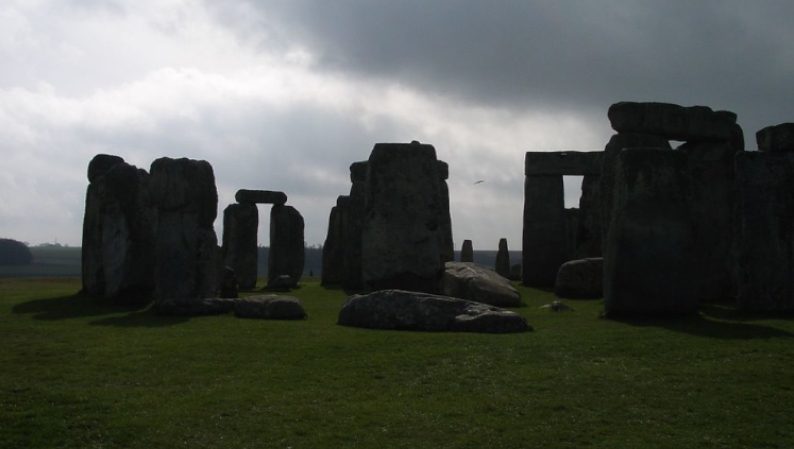
Over time, some societies created increasingly sophisticated structures aligned with celestial events. Temples, monuments, ceremonial centers, and stone circles were often oriented toward significant solar, lunar, or stellar phenomena. These structures did not merely occupy the landscape—they interacted with it.
On certain mornings, sunlight might illuminate a specific chamber. On particular days of the year, the Sun could rise directly between two carefully positioned markers. Elsewhere, architectural alignments allowed generations of observers to track seasonal changes with remarkable precision.
The goal was not necessarily to build observatories in the modern sense. Rather, these structures helped transform fleeting observations into enduring knowledge. A person may forget. A community may change. But a stone marker placed on a hillside can continue pointing toward the same sunrise for centuries.
In this way, the sky became woven into the built environment. Time was no longer something people simply observed; it became something they recorded in wood, earth, and stone.
Across the world, cultures developed their own solutions. From the great stone circles of Europe to the temple complexes of Egypt and the carefully aligned ceremonial centers of the Americas, people were finding ways to anchor celestial cycles to the landscape around them.
The result was something remarkable: humanity had begun building an architecture of time.
The birth of calendars
At first, knowledge of celestial cycles lived primarily in observation and memory. People noticed that certain stars appeared before particular seasons. They remembered when the Moon reached a certain phase. They learned that the Sun rose or set in different places throughout the year and that these changes followed recognizable patterns.
Over generations, those observations accumulated. As societies became more settled and complex, memory alone was no longer sufficient. Knowledge needed to be preserved, shared, and passed from one generation to the next with greater accuracy than stories alone could provide.
This is where calendars begin to emerge.
A calendar is more than a list of days. At its heart, a calendar is a system for organizing recurring patterns. It takes the cycles people observe in nature—especially in the sky—and translates them into a framework that can be recorded, communicated, and used for planning.
The real breakthrough was not simply counting days, however; it was recognizing that the future could be anticipated.
Once people understood that celestial events followed predictable cycles, they could begin to plan around them. Crops could be planted at the appropriate time. Festivals could be scheduled in advance. Religious observances could be coordinated across entire communities. Travelers could prepare for seasonal changes before they arrived.
In other words, calendars allowed people to move beyond reacting to the world and begin preparing for it.
Different cultures developed different solutions. Some relied primarily on the Moon. Others focused on the Sun. Many combined multiple cycles into sophisticated systems that reflected local needs, beliefs, and environments. Yet despite their differences, nearly all calendars share a common origin: careful observation of recurring patterns in the natural world.
What began as watching the sky gradually became one of humanity’s most powerful tools for organizing society. The calendar transformed time from something experienced into something managed.
The original architecture of time
Today, most of us rarely think about where our calendars come from. We glance at the date on a phone, schedule appointments months in advance, and trust digital reminders to tell us where we need to be and when. Time feels precise, predictable, and largely disconnected from the natural world.
Yet beneath all our modern systems lies a much older foundation. Long before mechanical clocks, printed calendars, or smartphone notifications, humanity learned to organize life around recurring patterns in the heavens. The Sun, Moon, planets, and stars provided a dependable framework for understanding the passage of days, months, and years. Entire civilizations built their agriculture, trade, religious observances, navigation, and social structures around those celestial cycles.
In a very real sense, the sky was humanity’s first timekeeping technology. Its rhythms inspired the earliest calendars, guided the construction of monuments and ceremonial centers, and helped transform scattered observations into shared systems of knowledge. What began as simple acts of attention eventually became one of the foundations upon which civilization itself was built.
Even now, the legacy of those ancient skywatchers surrounds us. Our months still echo the cycle of the Moon. Our years still follow Earth’s journey around the Sun. We continue to mark solstices, equinoxes, eclipses, and seasonal celebrations much as our ancestors did, even if we understand them differently today.
The tools have changed. The patterns have not.
The heavens continue their ancient dance overhead, just as they did thousands of years ago. The difference is that we now carry the descendants of those first calendars in our pockets.
The architecture of time is still all around us. We have simply become so accustomed to living inside it that we rarely stop to notice.
“Stone Henge” by Oli R is licensed under CC BY 2.0.
Featured image: “Stone Henge” by Oli R. (CC BY 2.0).
Leave a Reply