
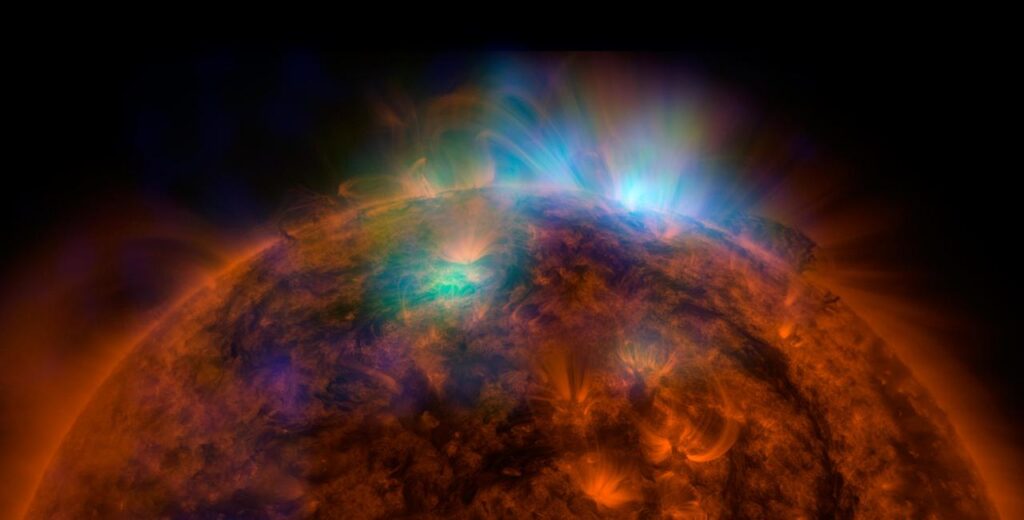
The Sun is the star at the center of our solar system. It contains more than 99% of all the mass in the solar system and provides the light, ehat, and energy that make life on Earth possible.
Astronomers often use the Latin name Sol when discussing the Sun in a scientific context. That’s where terms like solar system, solar eclipse, and solar year come from.
Almost everything we experience as “time” on Earth is connected to the Sun.
The daily cycle of sunrise and sunset creates the day. The Earth’s orbit around the Sun creates the year. The changing angle of sunlight throughout that year gives us the seasons.
For thousands of years, people tracked the Sun’s movements to determine when to plant crops, hold festivals, navigate long distances, and organize their calendars. Long before clocks existed, the Sun was humanity’s most important timekeeper.
The Sun also defines one of the most important concepts in astronomy: the ecliptic, which is the apparent path the Sun follows across the sky during the year.
Quick Facts
- Type: G-type main-sequence star (often called a “yellow dwarf”)
- Age: About 4.5 billion years
- Average distance from Earth: 93 million miles (150 million km)
- Diameter: About 864,000 miles (1.39 million km)
- Light travel time to Earth: About 8 minutes 20 seconds
Fun Fact
The sunlight reaching your eyes right now began as energy produced in the Sun’s core. That energy can take hundreds of thousands of years to work its way to the Sun’s surface before making the final trip to Earth in just over eight minutes.
Related Terms
- solar system
- ecliptic
- solstice
- equinox
- solar eclipse
- celestial sphere
- year
Featured image: Sun image courtesy of NASA/SDO via the NASA Image and Video Library.
